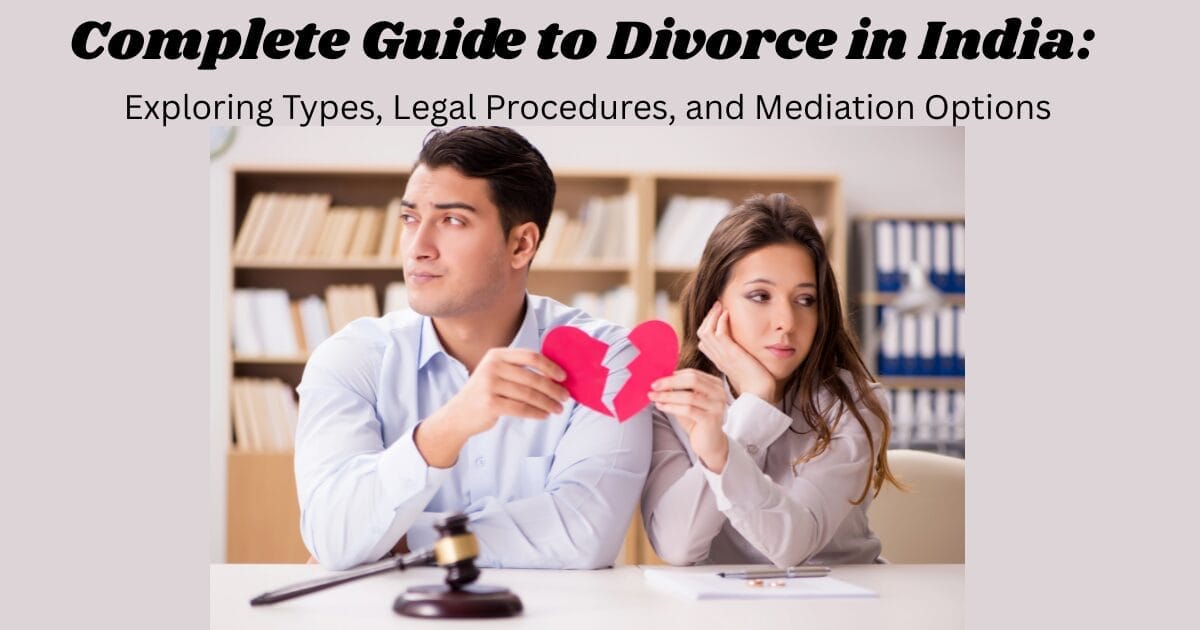
Complete Guide to Divorce in India: Exploring Types, Legal Procedures, and Mediation Options
Key Takeaways
- Under Section 13B of the Hindu Marriage Act, spouses can file a mutual consent divorce only after one year of marriage and must observe a six-month waiting period between motions.
- Contested divorce petitions must specify grounds such as cruelty, adultery, or two-year desertion and be supported by evidence like medical reports, witness statements, and financial records.
- To file a mutual consent divorce without an attorney, spouses must jointly submit a petition, affidavits, marriage certificate, identity proofs, and attend the required family court hearings.
- Mediation involves selecting a neutral mediator, conducting facilitated sessions, and drafting a signed settlement agreement that becomes legally binding and enforceable by the family court.
- Under the Special Marriage Act and Hindu Marriage Act, spouses can divorce after one year of marriage, while Muslim law allows Talaq with an Iddat period and court-approved Talaq-e-Fasq.
Divorce can be tough, but knowing your options can make it easier. In India, there are different types of divorce, and understanding which one suits you best is crucial.
Whether you’re considering a mutual consent divorce or a contested divorce, navigating the legal landscape can feel overwhelming. You don’t have to hire an attorney, but knowing the steps is essential.
Sometimes, mediation can offer a less stressful path than traditional court proceedings. It’s worth exploring if you want to keep things as amicable as possible.
Every religious group in India has different rules for divorce, like the Hindu Marriage Act or the Muslim Personal Law. Knowing who can file and under which act can help avoid confusion.
In this guide, I’ll walk you through the various facets of divorce in India. Let’s simplify the process and make sure you have all the information you need.
What Are the Different Types of Divorce Available in India and Which One Suits Your Situation Best?
In India, the main types of divorce are Mutual Consent Divorce, Contested Divorce, and Divorce under specific personal laws like Hindu and Muslim Marriage Acts. Each type suits different situations based on mutual agreement or differing perspectives of the parties involved.
What Is Mutual Consent Divorce?
Mutual Consent Divorce occurs when both partners agree to end the marriage amicably. It is recommended for couples who wish to part ways without disputes. The couple submits a joint petition to the court, detailing their agreement on asset division, alimony, and child custody. This type of divorce is usually faster and less stressful than contested divorce.
What Is Contested Divorce?
A Contested Divorce occurs when one spouse files for divorce without the other’s consent. This type often involves legal battles over grounds like cruelty, adultery, or abandonment. The court may require evidence and witness testimonies, making this process lengthy and emotional. It generally takes a minimum of 6 months, but can extend for years if contested thoroughly.
What Are the Grounds for Divorce Under Various Laws?
The grounds for divorce may vary based on personal laws:
- Hindu Marriage Act: Grounds include cruelty, adultery, desertion, and incurable insanity.
- Muslim Personal Law: Grounds include irretrievable breakdown of marriage, cruelty, and loss of earning capacity.
- Special Marriage Act: Also recognizes irretrievable breakdown and mutual consent.
Comparison of Divorce Types
| Type of Divorce | Consent | Duration | Complexity |
|---|---|---|---|
| Mutual Consent | Yes | 6 months | Low |
| Contested | No | 6 months – several years | High |
Which Type of Divorce Is Best for You?
Choosing the right type of divorce depends on your situation. Consider these points:
- If you and your spouse mutually agree to part ways, opt for Mutual Consent Divorce.
- If there are serious grievances or conflicts, you might have to go the Contested Divorce route.
- If children are involved, think about custody arrangements before deciding.
Need Legal Assistance?
Divorce can be a complex process. Consulting a lawyer can help clarify your options based on your circumstances. They can guide you through the legal system and prepare necessary documents.
Mini FAQ
1. Can I file for divorce without an attorney?
Yes, it is possible to file for divorce without an attorney, especially in mutual consent cases. However, having legal expertise can make the process smoother.
2. How long does a mutual consent divorce take?
Typically, it takes around 6 months from filing to obtain a divorce decree, provided both parties agree.
3. What documents are needed for filing divorce?
You will need marriage certificates, identity proofs, and any agreements on alimony or child custody, among other documents.
How Can You Navigate the Legal Procedures for Filing a Mutual Consent Divorce in India Without An Attorney?
Filing for a mutual consent divorce in India without an attorney is possible, but it requires careful attention to detail and understanding of the legal framework. You can initiate the process by filing a petition jointly with your spouse in the family court where either of you resides.
What Are the Steps Involved in Filing a Mutual Consent Divorce?
To file for a mutual consent divorce, follow these steps:
- Draft a Mutual Divorce Petition: Write a petition stating that both parties agree to the divorce and include details like marriage date, duration, and reason for divorce.
- Affidavit: Prepare an affidavit confirming that the divorce is mutual and without coercion.
- Documents Required: Gather the necessary documents such as marriage certificate, birth certificates of children (if any), and ID proofs.
- Filing the Petition: Submit the petition and affidavit at the local family court.
- Hearing: Attend the hearing along with your spouse. The court may take time to ensure both parties agree.
- Decree of Divorce: If the court is satisfied, a decree of divorce will be granted after a waiting period of six months.
What Legal Provisions Support Mutual Consent Divorce?
The primary legal framework for mutual consent divorce in India is provided under the Hindu Marriage Act, 1955, and the Special Marriage Act, 1954.
- Under Section 13B of the Hindu Marriage Act, both spouses can file for divorce by mutual consent after one year of marriage.
- The Special Marriage Act also allows for mutual divorce under similar provisions.
This legal framework ensures that couples can end their marriages amicably without the stress of a contested process.
What Documents Do You Need?
For a smooth filing process, gather the following documents:
- Marriage Certificate
- Valid ID proof (Aadhar, Passport)
- Photographs (Joint)
- Birth Certificates of Children (if applicable)
- Affidavit stating mutual consent
Having these documents ready is crucial to avoid delays.
Can You Represent Yourself In Court?
Yes, you can represent yourself (also known as ‘pro se representation’) in court. Here are some tips:
- Know the Legal Terms: Familiarize yourself with basic legal terminology.
- Prepare Your Statements: Draft your statements clearly and concisely.
- Be Presentable: Dress appropriately for your court appearance.
- Stay Calm: Speak clearly and remain calm during the proceedings.
Being your own advocate can save costs and help in understanding the proceedings better.
Comparison of Mutual Consent Divorce and Contested Divorce
| Aspect | Mutual Consent Divorce | Contested Divorce |
|---|---|---|
| Duration | 6 months + 1st motion | 1 year or more |
| Cost | Low | High |
| Complexity | Low | High |
| Need for Evidence | None | Documentation required |
| Requirement of Agreement | Yes | No |
| Court Proceedings | Fewer | Multiple hearings |
This table illustrates the key differences to help you understand which option suits you better.
What Common Mistakes Should You Avoid?
When filing for mutual consent divorce, be cautious of these common mistakes:
- Failing to properly fill out the divorce petition.
- Not attaching all required documents.
- Ignoring the court’s advice during hearings.
- Not preparing for the waiting period of six months.
Avoiding these mistakes can help you navigate the process more smoothly.
Need Legal Assistance?
While filing for mutual consent divorce without an attorney is feasible, having one can significantly ease the process. If you need guidance or have doubts, consulting with a legal professional is advisable. They can help clarify procedures and prepare necessary documentation.
FAQ
Q: How long does the entire mutual consent divorce process take?
A: The process generally takes around 6 months from filing to the final decree, assuming no complications arise.
Q: Can I withdraw my consent after filing?
A: Yes, you can withdraw your consent at any stage before the final decree is passed.
Q: What if we have children?
A: You must discuss child custody and support, which should be included in the mutual divorce petition.
When Is It Appropriate to File for a Contested Divorce, and What Evidence Do You Need to Support Your Case?
Filing for a contested divorce is appropriate when partners cannot agree on key issues, such as child custody or property division. It becomes the only option when one spouse contests the divorce or when mutual consent is not possible.
What Are the Conditions Leading to a Contested Divorce?
Certain situations lead couples to file for a contested divorce. Here are common conditions:
- One partner commits adultery.
- There are instances of cruelty or abuse.
- Desertion for over two years.
- Incompatibility without a chance of reconciliation.
- Irretrievable breakdown of the marriage.
These reasons must be backed by tangible proof to solidify a case in court.
What Evidence Is Required for a Contested Divorce?
When filing for a contested divorce, compelling evidence strengthens your claims. Different types of evidence may include:
- Witness Statements: People who can attest to the situation, such as friends or family, help validate claims of abuse or cruelty.
- Medical Reports: Documenting injuries or trauma resulting from domestic violence can be crucial.
- Photos or Videos: Visual proof of abuse or poor living conditions may support your case.
- Financial Records: Showing financial discrepancies can assist in property disputes or alimony claims.
- Text Messages or Emails: Communication history can prove adultery, threats, or harmful behavior.
Using solid evidence greatly impacts the outcome of your case.
What Steps Should You Follow to File a Contested Divorce?
Here are steps to follow when pursuing a contested divorce:
- Gather Evidence: Collect all necessary documents and proof.
- Draft a Petition: Prepare a divorce petition stating the grounds clearly.
- File with Court: Submit the petition to the appropriate family court.
- Serve Notice: Legally inform your spouse about the divorce filing.
- Attend Hearings: Participate in court hearings and present your evidence.
- Final Judgment: Wait for the court to issue a final decree.
You’ll want to have everything in order for a smoother process.
How Does a Contested Divorce Compare to Other Types?
To understand contested divorce better, here’s a comparison table of different divorce types:
| Type of Divorce | Agreement Required | Duration | Complexity |
|---|---|---|---|
| Mutual Consent Divorce | Yes | 6-18 months | Simple |
| Contested Divorce | No | 1-5 years | Complex |
This table highlights that contested divorces take longer and are more complicated than mutual consent divorces.
Need Legal Assistance?
If you are considering a contested divorce, having legal guidance can be beneficial. An attorney can help navigate the complexities of family law and build a strong case.
Mini FAQ
- What if I don’t have enough evidence?
A lack of evidence can weaken your case. Consider gathering witness statements or documents before filing. Can I file for divorce on my own?
Yes, you can file on your own, but understanding legal procedures is vital for your success.Will my spouse need to respond to the petition?
Yes, once served, your spouse has a legal obligation to respond to the divorce petition.
Proper preparation and evidence collection are key to a successful contested divorce.
Why Should You Consider Mediation as an Alternative to Traditional Divorce Proceedings in India?
Mediation offers a less confrontational approach to divorce, allowing both parties to reach a mutual agreement. This process is often quicker and more cost-effective than traditional court proceedings.
What is Mediation?
Mediation is a voluntary process where a neutral third party helps couples resolve their disputes. This mediator facilitates discussions to help both parties agree on key issues, such as child custody and property division. With rising divorce rates in India, mediation serves as a practical alternative to lengthy court battles.
What Are the Benefits of Mediation?
- Cost-Effective: Mediation can be significantly cheaper than litigation. You save on court fees and legal charges.
- Confidential: The discussions in mediation are private, unlike court proceedings that are public.
- Faster Resolutions: Mediation typically resolves issues quicker than a court, which can have long waiting times.
- Improved Relationships: Mediation focuses on collaboration, which often helps maintain a cordial relationship, especially important if children are involved.
- Control Over Outcome: Both parties have a say in the final decision, leading to mutually satisfying results.
How Does Mediation Work in India?
Mediation involves several steps that are straightforward:
- Selection of Mediator: Both parties must agree on a mediator. This can be a trained professional or an experienced lawyer.
- Initial Meeting: The mediator meets with both parties to explain the process and set ground rules.
- Sharing of Concerns: Each party shares their concerns and what they hope to achieve.
- Facilitated Discussion: The mediator guides the conversation, helping both sides find common ground.
- Drafting the Agreement: Once an agreement is reached, the mediator drafts it for both parties to sign.
Comparison of Mediation and Traditional Divorce
| Aspect | Mediation | Traditional Litigation |
|---|---|---|
| Cost | Lower | Higher |
| Time | Shorter | Longer |
| Confidentiality | Yes | No |
| Control over Outcome | More | Less |
| Relationship Maintenance | Better | Worse |
Real Scenarios Where Mediation Works
Here are a couple of examples illustrating successful mediation:
– Scenario 1: Neha and Aman sought a divorce. They had a child and were concerned about custody. Through mediation, they agreed on shared parenting and created a flexible visitation schedule. This allowed them to maintain a better relationship for their child’s well-being.
– Scenario 2: Priya and Raj had disagreements about property division. Instead of going to court, they agreed to a mediator. With guidance, they discussed financial aspects and reached a fair settlement, saving time and emotional stress.
Need Legal Assistance?
If you are considering mediation but don’t know where to start, our team is here to help. We can connect you with experienced mediators and guide you through the process.
FAQs
What qualifications should a mediator have?
A mediator should have relevant training and experience in family law and conflict resolution.
Can mediation be used for all types of divorce?
Yes, mediation can be beneficial for both mutual consent and contested divorces, though its effectiveness depends on both parties’ willingness to cooperate.
Is the agreement from mediation legally binding?
Yes, once signed, the mediation agreement can be enforced by the court, making it a legally binding document.
Who Can Initiate Divorce Proceedings Under Hindu, Muslim, and Special Marriage Act in India, and What Are the Differences?
Any individual can initiate divorce proceedings in India. However, the exact process and grounds for divorce depend on the personal laws applicable to each community. Let’s explore who can initiate divorce under the Hindu Marriage Act, the Muslim Personal Law, and the Special Marriage Act.
Who Can File for Divorce Under the Hindu Marriage Act?
Under the Hindu Marriage Act, both spouses can file for divorce. Either partner can seek divorce based on specific grounds. These include cruelty, adultery, desertion, and mental disorder. The law allows either husband or wife to initiate the process after one year of marriage.
Grounds for Hindu Divorce
- Adultery: One partner has had a sexual relationship outside the marriage.
- Cruelty: Physical or mental abuse makes living together unbearable.
- Desertion: A spouse intentionally leaves the other for more than two years.
- Conversions: If one spouse converts to another religion.
- Mental Disorder: A significant mental illness that affects marriage life.
- Irretrievable Breakdown of Marriage: A court can declare a marriage over if it considers reconciliation impossible.
What About Divorce Under Muslim Personal Law?
In Muslim law, divorce can be initiated by either spouse but has distinct mechanisms. The husband typically has unilateral rights to divorce, known as “Talaq.” The wife can seek divorce through “Talaq-e-Fasq,” requiring a valid reason and judicial approval.
Key Features of Muslim Divorce
- Talaq: A husband can verbally divorce his wife, but must follow specific procedures.
- Iddat: A waiting period after divorce to ensure there is no undisclosed pregnancy.
- Talaq-e-Fasq: A wife must apply to a court for divorce unless the husband consents.
- Mutual Consent: Both partners can file for divorce jointly on agreed terms.
How Does the Special Marriage Act Differ?
The Special Marriage Act provides a secular framework for marriage and divorce applicable to all religions. Either party can file for divorce under this Act, typically after at least one year of marriage.
Grounds for Divorce Under the Special Marriage Act
- Desertion for over two years.
- Cruelty by one partner.
- Adultery by one partner.
- Mental Disorder affecting marital duties.
- Irretrievable Breakdown of Marriage.
Comparison Table: Divorce Initiation Under Different Acts
| Aspect | Hindu Marriage Act | Muslim Personal Law | Special Marriage Act |
|---|---|---|---|
| Who Can Initiate | Either partner | Husband or wife (different mechanisms) | Either partner |
| Grounds | Various specified grounds | Talaq, mutual consent | Similar to Hindu Act |
| Waiting Period | None specified | Iddat period applicable | None specified |
What Are the Steps to Initiate the Divorce Process?
- Identify Applicable Law: Determine whether Hindu, Muslim, or Special Marriage Act applies.
- File Petition: Draft and file a divorce petition in the appropriate court.
- Serve Notice: Provide notice to the other spouse about the proceedings.
- Attend Hearing: Both partners appear in court for hearings.
- Obtain Decree: After hearings, the court will issue a divorce decree if grounds are valid.
What Should You Know About Mediation?
Mediation is a useful process if both partners wish to avoid lengthy court battles. It helps in amicable settlements, especially for matters like child custody and division of property.
Need Legal Assistance?
When considering divorce, it’s essential to get professional help. Navigating the legal landscape can be complicated. Our law firm offers consultations to help make this process smoother. Contact us for more information.
Frequently Asked Questions
Can I file for divorce if my spouse is missing?
Yes, under the Hindu Marriage Act, you can file for divorce if your spouse has been missing for over seven years.
Is there a specific time frame for filing divorce?
Yes, under most laws, you can file after one year of marriage, but consult your lawyer for specifics.
Can we file for mutual consent divorce anytime?
Yes, both partners can file for mutual consent divorce at any time during the marriage as long as terms are agreed upon.
Conclusion
Understanding your options and the legal framework can simplify the divorce process in India.
Choosing the right type of divorce is crucial for a smoother transition. Whether you opt for mutual consent or contested divorce, clarity in your decision can save time and stress.
If you’re considering divorce, gather essential documents like your marriage certificate and any agreements on custody. A well-prepared petition can streamline the process.
Consulting a family law attorney can provide valuable guidance tailored to your situation. Their expertise can ease the complexities of navigating divorce proceedings.
I encourage you to take charge of your journey with confidence. Familiarize yourself with your rights, and don’t hesitate to seek professional advice when needed.


Pratham is a legal information researcher and content creator dedicated to making Indian law accessible to everyone. With expertise in legal research and content development, Pratham creates detailed, well-researched articles on Indian laws to help readers understand complex legal concepts in simple language. All content is thoroughly researched from authentic legal sources including Indian statutes, court precedents, government publications, and established legal databases. Each article is fact-checked and updated regularly to reflect current laws and amendments.