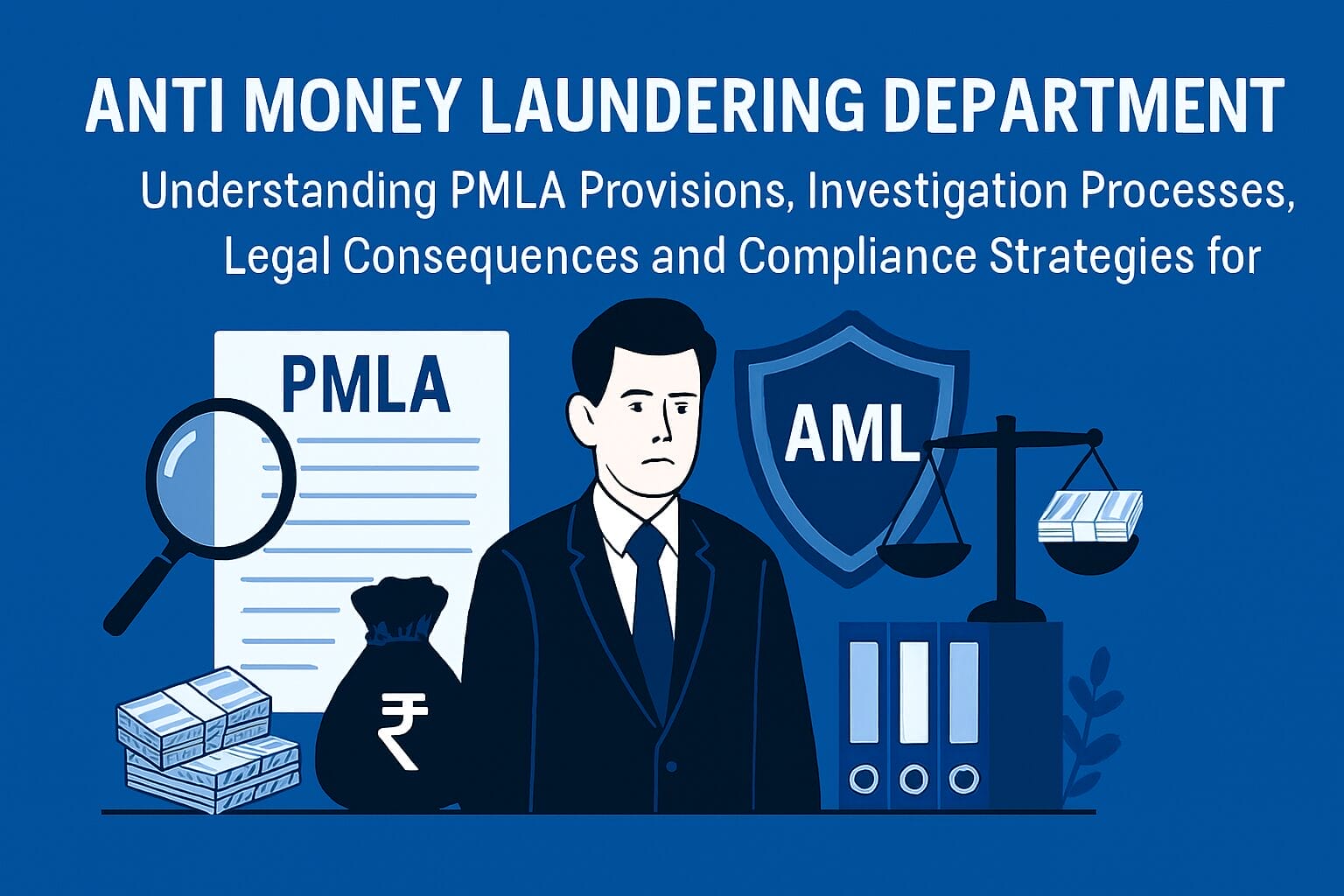
Anti Money Laundering Department: Understanding PMLA Provisions, Investigation Processes, Legal Consequences, and Compliance Strategies for Businesses in India
Key Takeaways
- Under PMLA, financial institutions must maintain customer identification records and transaction details for a minimum of five years and re-evaluate clients if additional doubts arise.
- Financial institutions must file Cash Transaction Reports for deposits above INR 10 lakh and Suspicious Transaction Reports for any activity, regardless of amount, with the FIU-India.
- The ED conducts PMLA investigations in four stages—collection of bank and intelligence reports, preliminary inquiry, special court filing, and follow-up actions such as asset seizure and arrests.
- Non-compliance under PMLA can attract penalties up to ₹5 crore, imprisonment up to seven years for responsible officials, and seizure of assets involved in money laundering.
- Businesses should perform internal PMLA compliance audits annually or upon triggers like regulatory amendments, unusual transactions, or changes in key personnel.
Understanding the Prevention of Money Laundering Act (PMLA) is crucial for financial institutions in India. This law lays down vital compliance requirements that banks and other entities must follow to prevent money laundering.
In this post, I’ll walk you through the key provisions of PMLA and how they impact financial institutions. We will look at how investigations into money laundering cases are conducted by the Enforcement Directorate.
I’ll also explain why failing to comply with PMLA can lead to significant penalties for businesses and individuals. Additionally, we will discuss when it’s essential for companies to conduct internal audits to ensure compliance.
Finally, I’ll identify the key authorities responsible for enforcing PMLA and the sectors they monitor closely. Understanding these aspects can help businesses better navigate their responsibilities and avoid legal pitfalls.
What Are the Key Provisions of the Prevention of Money Laundering Act (PMLA) That Impact Financial Institutions in India?
Financial institutions in India must comply with rigorous requirements under the Prevention of Money Laundering Act, or PMLA. These requirements include customer identification, transaction monitoring, reporting suspicious transactions, and maintaining proper records. Compliance ensures these institutions help prevent money laundering activities.
What Are the Customer Due Diligence Requirements?
Customer due diligence (CDD) is the first step for banks and financial institutions under the PMLA. This involves:
– Verifying the identity of customers.
– Understanding the nature and purpose of the business relationship.
– Conducting ongoing monitoring of transactions.
Financial institutions must maintain a clear record of customers’ identities and transactions for at least five years. If there are any doubts about a customer’s activities, institutions must re-evaluate their relationship.
What Reporting Obligations Exist for Financial Institutions?
Under the PMLA, financial institutions must report certain transactions to the Financial Intelligence Unit (FIU) of India. This includes:
– Any cash transactions exceeding INR 10 lakh.
– Transactions involving suspicious activities, regardless of amount.
Failure to report these transactions can lead to severe penalties. Institutions should have an established internal mechanism for identifying and reporting suspicious transactions promptly.
How Do Financial Institutions Monitor Transactions?
Transaction monitoring is crucial for identifying unusual patterns that may indicate money laundering. Banks can employ various methods, such as:
– Automated monitoring systems that flag high-risk transactions.
– Regular audits to assess compliance with PMLA guidelines.
Institutions must invest in technology to enhance monitoring capabilities and ensure compliance.
What Are the Record-Keeping Requirements?
Record-keeping is a fundamental aspect of the PMLA. Financial institutions need to keep specific records for effective compliance. Key requirements include:
– Maintaining records of customer identification documents.
– Keeping transaction records, including the nature, amount, and date of transactions.
– Storing records for a minimum of five years after the business relationship ends.
Adhering to these record-keeping requirements can make audits smoother and reduce the risk of penalties.
Can You Provide an Example of Non-Compliance Consequences?
If a bank fails to report suspicious transactions, it can face penalties. For instance, in 2021, a private bank was fined for not reporting multiple large cash deposits. The penalty included both financial fines and reputational damage. This serves as a reminder of the importance of strict adherence to PMLA provisions.
| Type of Requirement | Details |
|---|---|
| Customer Due Diligence | Verification of identity and monitoring of the relationship. |
| Transaction Reporting | Report transactions above INR 10 lakh or suspicious activities. |
| Record Keeping | Store records for at least five years post-relationship. |
Need Legal Assistance?
If financial institutions need help understanding their obligations under the PMLA, seeking legal advice is essential. Navigating compliance can be complex, and knowledgeable legal experts can offer valuable guidance.
Frequently Asked Questions (FAQs)
- What are the penalties for non-compliance under the PMLA?
Penalties include hefty fines and possible imprisonment for responsible officials. - How often should financial institutions audit their compliance?
Institutions should conduct audits at least annually or when there are significant changes in operations.
Is training staff important for compliance with PMLA?
Yes, training is crucial to ensure that all employees understand their roles in preventing money laundering.
How Does the Investigation Process Work in Cases Related to Money Laundering Under PMLA?
The investigation of money laundering cases under the Prevention of Money Laundering Act (PMLA) is managed primarily by the Enforcement Directorate (ED). This process follows distinct stages: gathering information, conducting inquiries, and filing complaints.
What Is the Initial Stage of the Investigation?
The first step in the investigation is sourcing information. This usually comes from various sources, including:
- Reports from banks on suspicious activities.
- Intelligence reports from law enforcement agencies.
- Public complaints or whistleblower tips.
The ED collects this data to assess if it warrants further investigation.
What Happens During Inquiries?
Once information is collected, the ED conducts a preliminary inquiry. This involves:
- Reviewing bank statements and transaction records.
- Interviewing individuals connected to the alleged laundering.
- Coordination with other law enforcement agencies for relevant data.
The purpose is to determine the validity of the money laundering claims and gather sufficient evidence.
What Is the Role of Financial Institutions?
Financial institutions play a critical role in this investigation. They must maintain records of transactions and report suspicious activities to the ED. Compliance with these requirements is crucial because any lapses can lead to the institution facing penalties.
Affected institutions can include:
- Banks
- Insurance companies
- Real estate firms
How Does the ED File Complaints?
If evidence suggests money laundering, the ED files a complaint with a special court. This includes all findings from the inquiry, along with supporting documentation.
The courts have the power to issue warrants for arrests or property seizures based on the evidence presented.
What Happens After Filing a Complaint?
After filing the complaint, the ED may proceed with further investigations or legal actions. This could involve:
- Arresting individuals linked to the money laundering.
- Seizing assets obtained through illicit means.
- Filing prosecution cases against offenders.
This multi-stage process ensures a thorough examination and legal action against money laundering cases.
Investigation Process Overview
| Stage | Description |
|---|---|
| Information Gathering | Collect reports from banks and intelligence sources. |
| Preliminary Inquiry | Review records and interview connected individuals. |
| Filing Complaints | Submit findings to a special court for legal action. |
| Follow-Up Actions | Arrests, asset seizures, and prosecution. |
Need Legal Assistance?
If you are involved in a money laundering investigation, seeking legal guidance is smart. Experienced lawyers can help navigate the complexities of the PMLA.
Mini FAQ
What powers does the ED have during investigations?
The ED can freeze assets, conduct searches, and arrest individuals suspected of money laundering.
Can a person challenge an ED investigation?
Yes, individuals can challenge an investigation in court if they believe it is unjust or unlawful.
What is the penalty for money laundering under PMLA?
Penalties for money laundering can include imprisonment and substantial fines, depending on the severity of the offense.
Why Are Non-Compliance and Reporting Failures Under PMLA Punishable Offenses for Business Entities in India?
Non-compliance and reporting failures under the Prevention of Money Laundering Act (PMLA) are serious offenses for business entities in India. They can lead to severe legal consequences, including hefty fines, imprisonment, and reputational damage for companies and individuals involved.
What Are the Legal Consequences of Non-Compliance?
The PMLA sets strict requirements for businesses to prevent money laundering. Violations lead to:
– Heavy fines that can reach up to ₹5 crores or more.
– Imprisonment of key executives for up to seven years.
– Seizure of assets involved in the laundering activities.
Considering the Indian economy’s gravity, the government treats compliance very seriously. Failure to adhere to PMLA can result in severe ramifications not just for individuals but for the entire organization.
What Reporting Failures Are Considered Offenses?
Reporting failures under PMLA can include:
1. Failing to submit Suspicious Transaction Reports (STRs).
2. Neglecting to conduct due diligence on clients.
3. Not maintaining proper records of transactions.
4. Inaccurate reporting of transaction values.
Businesses must understand these failures are not taken lightly. Each reported failure can invite an investigation by the Enforcement Directorate (ED), which may lead to legal proceedings.
How Does Non-Compliance Impact Business Reputation?
Reputation is crucial for any business. Non-compliance can severely impact how the public and other businesses view an entity. Consequences include:
– Damage to brand image.
– Loss of client trust and loyalty.
– Difficulty in forming partnerships and collaborations.
A tarnished reputation can directly lead to decreased revenue and market presence.
Steps for Businesses to Ensure Compliance
To avoid non-compliance pitfalls, businesses should take the following proactive steps:
1. Develop a robust compliance program.
2. Provide regular training for staff on PMLA requirements.
3. Conduct internal audits frequently to identify potential gaps.
4. Hire a compliance officer or team to oversee adherence to laws.
5. Maintain clear records of all transactions and customer due diligence.
Keeping compliance a priority can save enterprises from painful penalties and preserve their standing in the market.
Need Legal Assistance?
Do you face challenges regarding PMLA compliance? Our team at [Law Firm Name] is here to help. We offer guidance on maintaining compliance and understanding the legal consequences of non-compliance under PMLA.
Mini FAQ
What happens if I fail to report suspicious transactions?
Failing to report can lead to legal penalties, including hefty fines and imprisonment.
How often should businesses conduct compliance audits?
Businesses should conduct audits at least annually or when there are changes in laws or operations.
Can individuals also face penalties for non-compliance?
Yes, individuals, especially in leadership roles, can face significant legal repercussions.
When Should Businesses Conduct Internal Audits to Ensure Compliance with PMLA Guidelines?
Businesses should conduct internal audits regularly or when several specific triggers occur. These proactive measures help ensure compliance with the Prevention of Money Laundering Act (PMLA) and reduce risks associated with non-compliance.
What Are the Key Triggers for an Internal Audit?
Certain events or circumstances should prompt businesses to carry out an internal audit regarding PMLA compliance:
– Change in Business Activities: If a business expands into new sectors that are under closer scrutiny, a compliance audit is necessary.
– Regulatory Changes: New guidelines or amendments to the PMLA should encourage a reassessment of compliance measures.
– Unusual Transactions: Detection of complex or high-value transactions that deviate from normal operations may indicate money laundering risk.
– Employee Changes: If there are high-level changes in the compliance team, it may warrant an audit to ensure continuity in compliance efforts.
– Client Complaints: Any complaints regarding financial transactions should lead to a thorough audit to ensure proper handling.
How Often Should These Audits Be Conducted?
I recommend conducting audits at least once a year. However, the frequency might vary based on industry risk levels. High-risk sectors should consider more frequent audits.
– Annual Audits: Recommended for most businesses to review their overall compliance practices.
– Quarterly Audits: Suggested for industries heavily monitored, like banking and real estate.
– Ad-hoc Audits: Necessary whenever unusual occurrences arise that could suggest non-compliance.
What Are the Steps for Conducting an Internal Audit?
The process of conducting an internal audit for PMLA compliance can be broken down into clear steps:
1. Identify Scope: Define the areas of the business to be audited.
2. Gather Documentation: Collect necessary financial documents, transaction records, and compliance policies.
3. Assess Risk Factors: Evaluate potential money laundering risks associated with the business activities.
4. Conduct Interviews: Talk with staff to get their perspective on compliance measures and practices.
5. Analyze Findings: Examine the gathered data to identify weaknesses in compliance.
6. Report Results: Prepare a detailed report on the findings and suggest improvements.
7. Implement Changes: Based on the audit, revise policies and training as needed.
What Are Common Compliance Failures?
Understanding past common failures can help businesses avoid similar pitfalls. Here are some frequent issues:
– Inadequate Training: Employees may not be fully aware of compliance requirements, leading to careless practices.
– Poor Record Keeping: Incomplete or inaccurate documentation can result in non-compliance findings.
– Delayed Reporting: Failing to report suspicious transactions can lead to severe penalties.
– Lack of Monitoring: Insufficient tracking of transactions can allow money laundering activities to go unnoticed.
| Type of Trigger | Recommended Action | Frequency |
|---|---|---|
| Change in Business Activities | Conduct a compliance audit | As needed |
| Regulatory Changes | Review compliance procedures | As required |
| Unusual Transactions | Investigate and audit | Immediately |
| Employee Changes | Reassess compliance measures | As needed |
Need Legal Assistance?
A legal expert can help align internal compliance audits with the PMLA. Ensuring full compliance not only protects your business but fosters a good reputation in the market. Please get in touch with us for more detailed insights on compliance audits and other related queries.
Mini FAQ
Q: What should I do if I find a compliance issue during an audit?
If an issue is identified, it is crucial to address it immediately. Revise policies and undertake further training if necessary.
Q: Can self-audits lead to penalties if issues are found?
Self-audits can expose weaknesses, but identifying issues proactively shows good faith and can mitigate penalties if issues are reported and resolved.
Q: Is it beneficial to hire an external firm for audits?
Yes, an external firm can provide an unbiased view and often has specialized knowledge of compliance norms.
Who Are the Key Authorities Responsible for Enforcing PMLA in India, and Which Sectors Are Most Monitored?
The key authorities responsible for enforcing the Prevention of Money Laundering Act (PMLA) in India include the Enforcement Directorate (ED), the Financial Intelligence Unit (FIU), and various regulatory bodies like the Reserve Bank of India (RBI) and the Securities and Exchange Board of India (SEBI). The sectors under most scrutiny are banking, real estate, and casinos.
Which Bodies Enforce PMLA?
The Enforcement Directorate (ED) plays a crucial role in investigating and prosecuting money laundering offenses. The ED gathers intelligence and initiates actions against individuals or entities involved in money laundering activities. The Financial Intelligence Unit (FIU) mainly focuses on receiving, processing, and analyzing information related to suspicious financial activities.
The Reserve Bank of India (RBI) ensures compliance among banks, while the Securities and Exchange Board of India (SEBI) performs similar roles for the capital market. These bodies work collectively to establish a robust framework that identifies and mitigates risks associated with money laundering.
What Are the Roles of These Authorities?
- Enforcement Directorate (ED): Investigates offenses and prosecutes under PMLA.
- Financial Intelligence Unit (FIU): Analyzes suspicious transactions reported by financial institutions.
- Reserve Bank of India (RBI): Enforces PMLA compliance among banks and conducts audits.
- Securities and Exchange Board of India (SEBI): Monitors compliance in mutual funds and stock markets.
Which Sectors Are Closely Monitored?
Various sectors face rigorous monitoring under PMLA. The following table summarizes the sectors under heightened scrutiny.
| Sector | Reason for Scrutiny |
|---|---|
| Banking | High volume of transactions; risk of fund transfers. |
| Real Estate | Large cash transactions; potential for under-reporting. |
| Casinos and Gaming | Significant cash inflows and high-risk financial activity. |
| Insurance | Potential for creating complex financial structures. |
Why Is Compliance Important for Financial Institutions?
Compliance with PMLA is mandatory for banks and financial institutions to avoid heavy penalties and reputational damage. Non-compliance can lead to criminal charges against key management personnel and significant fines.
Financial institutions must maintain systems for reporting suspicious activities to the FIU. They should implement anti-money laundering (AML) programs to train staff and monitor transactions effectively.
What Should Companies Do to Ensure Compliance?
- Establish an AML compliance program.
- Train employees on recognizing suspicious transactions.
- Conduct regular risk assessments of services and clients.
- Implement robust reporting procedures for unusual transactions.
Need Legal Assistance?
Companies may face serious implications under PMLA for non-compliance. Proactive measures are crucial. If you want to understand your obligations under PMLA, consider professional legal guidance. Our firm is ready to help you navigate these complex laws.
Mini FAQ
What happens if my organization fails to comply with PMLA?
Your organization may face prosecution, hefty fines, and potential shutdown of operations.
Is there training available for staff on PMLA compliance?
Yes, many organizations offer training programs focused on AML compliance and reporting.
How often should we conduct compliance audits?
It is advisable to conduct audits at least annually, or more frequently if business activities change significantly.
Conclusion
Understanding and complying with the PMLA is essential for financial institutions to avoid severe penalties.
Take immediate steps to train your team on PMLA obligations. Regularly audit your compliance processes to identify gaps. Report any suspicious transactions promptly to avoid penalties.
Remember, the PMLA mandates strict measures for customer due diligence, record-keeping, and transaction monitoring. Non-compliance can lead to heavy fines, imprisonment, and damage to reputation.
Stay informed about changes in regulations to ensure compliance. Seek legal guidance to navigate the complexities of the law. With proper measures in place, you can reduce risks and enhance your business integrity.

Pratham is a legal information researcher and content creator dedicated to making Indian law accessible to everyone. With expertise in legal research and content development, Pratham creates detailed, well-researched articles on Indian laws to help readers understand complex legal concepts in simple language. All content is thoroughly researched from authentic legal sources including Indian statutes, court precedents, government publications, and established legal databases. Each article is fact-checked and updated regularly to reflect current laws and amendments.