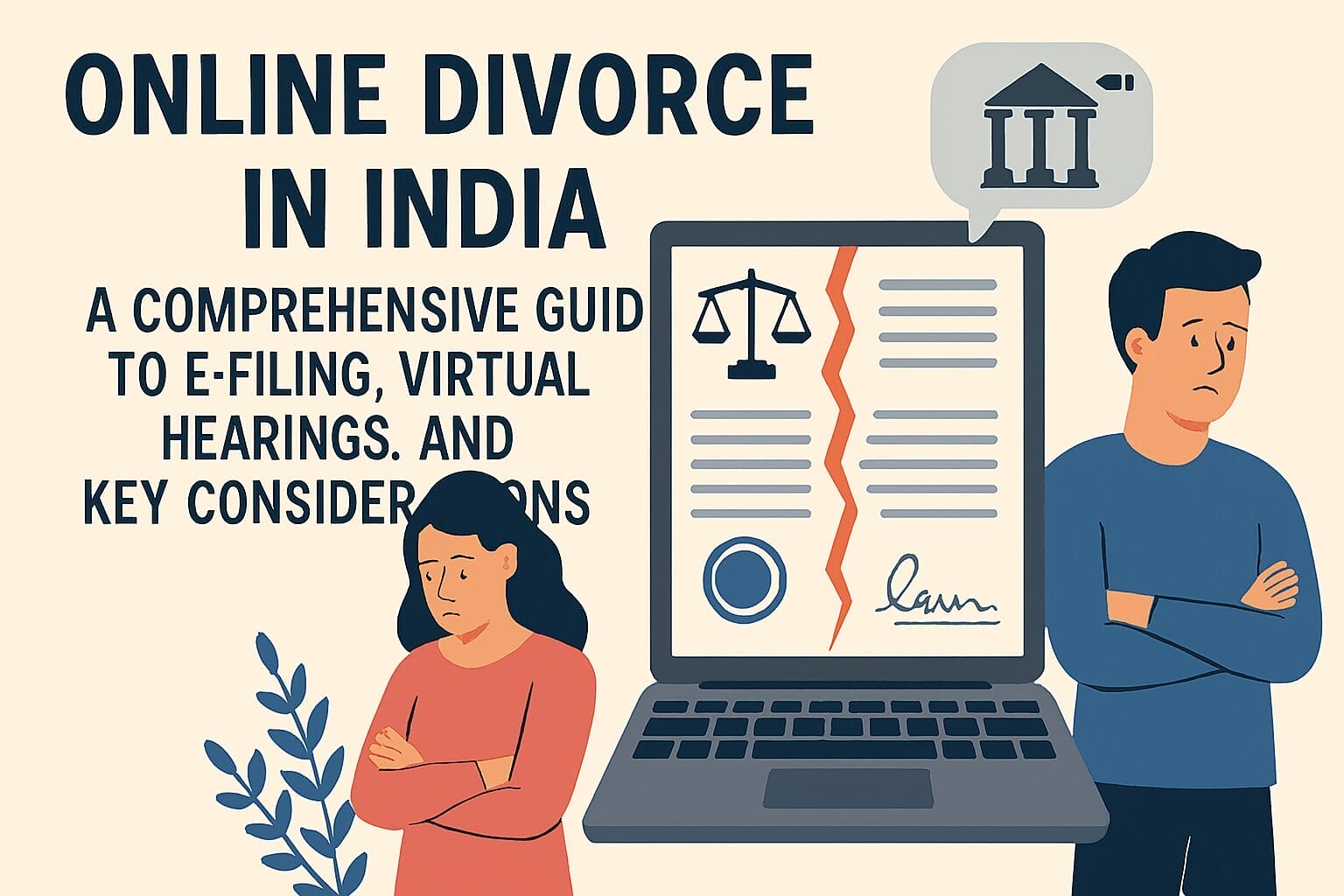
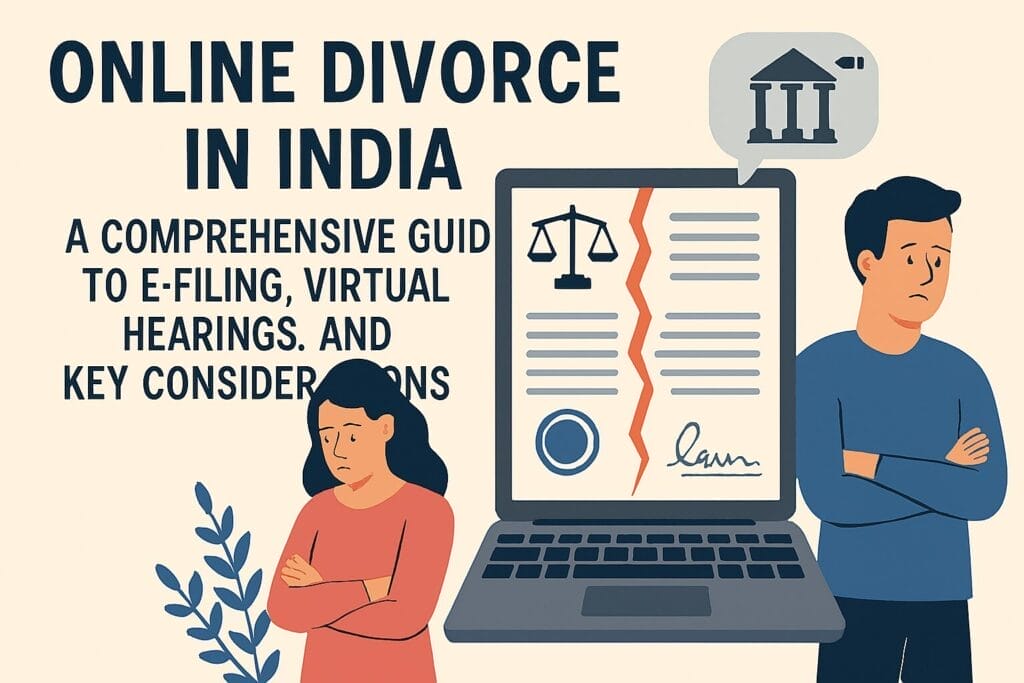
Online Divorce in India: A Comprehensive Guide to E-Filing, Virtual Hearings, and Key Considerations
Key Takeaways
- E-filing for divorce in India involves creating an account on the court e-filing portal, filling the divorce petition, online fee payment, uploading documents, and tracking status.
- Essential documents for e-filing include marriage certificate, proof of residence, identity proof (Aadhaar/voter ID), mutual agreement on alimony and custody, and class 3 digital signatures.
- The online divorce e-filing timeline typically spans 1–2 days for registration and document preparation, 3–7 days for initial court review, with hearings scheduled within weeks.
- Couples are eligible for online divorce only if both spouses file by mutual consent, reside in India, meet legal age limits (women 18, men 21), and have no pending proceedings.
- Virtual hearings require a formal request via the e-filing portal, receipt of a court notice, and participation through a video-conference platform with a stable internet connection, camera, and microphone.
Are you looking to speed up your divorce in India? The e-filing process and virtual court hearings can make it much simpler and quicker.
In this blog post, I’ll guide you through how couples can expedite their divorce process online. We’ll cover the key steps involved in filing for an online divorce, when to opt for virtual court hearings, and who is eligible to use these services.
You’ll also find a balanced view of the pros and cons of online divorces compared to traditional court divorces. Understanding these points can help you make an informed decision about your situation. Let’s dive in!
How Can Couples in India Expedite Their Divorce Process Through E-Filing?
Couples in India can speed up their divorce process by using the e-filing system provided by the Indian judiciary. E-filing allows for faster submission of documents and facilitates quicker processing of cases.
What Is E-Filing in Divorce Cases?
E-filing refers to the electronic submission of divorce petitions and documents to the court. Instead of physically visiting the court, couples can upload necessary files online. This method significantly reduces delays associated with manual filing.
How Does E-Filing Work in India?
The e-filing process typically consists of the following steps:
- Create an account on the official court website.
- Complete the online divorce petition form.
- Pay the requisite court fees through the online payment gateway.
- Upload supporting documents like marriage certificates and identification proofs.
- Submit the application and track its status online.
This systematic approach eliminates the need for in-person visits, thus reducing waiting times and paperwork complexities.
What Are the Benefits of E-Filing for Divorce?
E-filing offers several advantages:
- Time Efficiency: Online forms process faster than traditional methods.
- Accessibility: Users can file from anywhere, saving travel time.
- Reduced Costs: Minimizes costs associated with paper, printing, and travel.
By embracing e-filing, couples can navigate divorce proceedings more conveniently and efficiently.
What Are the Challenges of E-Filing?
Despite its benefits, e-filing does have challenges, such as:
- Technical Issues: Internet connectivity problems can hinder the process.
- Digital Literacy: Individuals unfamiliar with technology may find it difficult.
These challenges can create obstacles for some couples in the e-filing process.
Real-Life Example of E-Filing Impact
Consider a couple, Ravi and Anjali, who opted for e-filing. They submitted their divorce application online within an hour. In contrast, their friend Amit took the traditional route and spent days gathering documents and waiting in queues. Ravi and Anjali’s online submission resulted in a first hearing scheduled within weeks, while Amit faced months of delays.
Comparison: E-Filing vs. Traditional Filing
| Aspect | E-Filing | Traditional Filing |
|---|---|---|
| Time Taken | Faster processing | Slower due to paperwork |
| Accessibility | Available 24/7 | Limited office hours |
| Cost | Lower overall costs | Higher costs for travel and paper |
| Documentation | Digital submissions | Physical paperwork required |
Need Legal Assistance?
If you are considering e-filing your divorce application, seeking legal guidance can be beneficial. A lawyer can help ensure that you meet all requirements and avoid complications. They can also represent you in virtual hearings, making the process smoother.
Mini FAQ
Can I file for an uncontested divorce online?
Yes, couples can file for an uncontested divorce through the online system. Both partners must agree on terms.
What documents are needed for e-filing?
Typically, you need your marriage certificate, identification proof, and any agreements made regarding asset division.
Are there any prerequisites for e-filing?
You need a registered account on the court’s e-filing portal along with the necessary documents prepared in digital format.
What Are the Key Steps Involved in Filing for Online Divorce in India?
Filing for online divorce in India involves several straightforward steps. Couples must prepare documentation, register on the e-filing platform, and submit their petitions according to instructions provided by the court.
What Documents Are Needed for Online Divorce?
Gathering the right documents is crucial for a smooth online filing process. Here’s a list of essential documents:
- Marriage certificate
- Proof of residence
- Identity proof (Aadhaar card, voter ID, etc.)
- Any evidence supporting the grounds for divorce
- Affidavit for waiving the cooling-off period (if applicable)
Make sure to keep these documents ready before starting the online process. It eases the form submission.
How to Register on the E-Filing Platform?
To initiate online divorce, couples need to register on the designated e-filing portal. Here’s how:
- Visit the official e-filing website for your state or the Supreme Court.
- Create a new account by providing your email and phone number.
- Fill out your details and set a password.
- Verify your account through a confirmation email or SMS.
What Is the Process for Submitting the Petition Online?
Once registered, here’s the step-by-step process for submitting the divorce petition:
- Login to your account using the registered credentials.
- Select the appropriate form for filing for divorce.
- Fill in the required details accurately.
- Upload the necessary documents as specified.
- Submit the application and pay the required fees online.
After submission, the court will review your application.
How Long Does the E-Filing Process Take?
The timeline for the online divorce process can vary. Here’s a rough estimate:
| Step | Estimated Duration |
|---|---|
| Registration and Document Preparation | 1-2 days |
| Form Submission and Fees Payment | Immediately |
| Initial Court Review | 3-7 days |
| Hearing Scheduling | Varies (could take several weeks) |
What to Expect After Filing?
After submitting your online petition, couples should prepare for the next steps:
- The court will issue a notice for the first hearing.
- Both parties may need to appear for the hearing.
- Any required mediation sessions will be scheduled if applicable.
Staying in touch with the court and monitoring any updates is important to ensure the process moves forward smoothly.
Need Legal Assistance?
If the process feels overwhelming, consulting a legal expert is wise. An attorney can guide you through the specifics of your case and ensure all paperwork is completed accurately. For assistance, feel free to check our legal services.
Frequently Asked Questions
Can I file for divorce online without a lawyer?
Yes, individuals can file online without legal representation. However, professional advice is beneficial.
Is a cooling-off period required for mutual divorce?
No, the cooling-off period is not mandatory for mutual consent divorce if both parties agree.
What if my spouse does not respond to the online petition?
The court may proceed with the case based on the available evidence, but no response could delay the process.
When Should You Opt for Virtual Court Hearings During the Divorce Process in India?
Couples should choose virtual court hearings during the divorce process in India when they seek convenience, safety, and efficiency. Virtual hearings can be particularly useful for those living far from the court or facing health concerns, such as during a pandemic.
What Are the Advantages of Virtual Court Hearings?
Virtual court hearings come with several benefits:
– Convenience: Couples can join hearings from home. This saves time and travel costs.
– Safety: Virtual hearings reduce exposure to health risks, especially during pandemics.
– Reduced Delays: Online platforms help schedule hearings faster, minimizing the backlog often seen in traditional courts.
Many courts have embraced technology, leading to a smoother process. The introduction of the e-Courts project has made virtual hearings a viable option across India.
What Is the Process for Participating in Virtual Court Hearings?
To participate in virtual hearings, couples must complete several steps:
1. Request a Virtual Hearing: Many courts allow parties to apply for virtual hearings through e-filing.
2. Receive Confirmation: After the request, the court will send a notice confirming the hearing date and time.
3. Join the Hearing: Use a reliable internet connection and a device to log in to the virtual platform on the scheduled date.
It is crucial to check the specific virtual hearing guidelines provided by your local court. Each court may have its own procedures, so consult your lawyer for clarity.
What Are the Requirements for Virtual Court Hearings?
For successful participation in virtual hearings, several requirements must be met:
– Technology: A computer or smartphone with a camera and microphone is needed.
– Internet Connection: A stable internet connection is essential for clear communication.
– Familiarity with Tools: Know how to use the video conferencing tool specified by the court.
Which Types of Divorce Cases Suit Virtual Hearings Best?
Virtual hearings work best for certain types of divorce cases:
– Mutual Consent Divorce: These cases generally involve easier discussions between both parties.
– Simpler Cases: Matters that don’t require extensive witness testimony can benefit from virtual hearings.
For contested cases, virtual hearings may still work but might face challenges. It’s best to consult with legal professionals to determine the right approach.
Comparison of Virtual Court Hearings vs. Traditional Court Hearings
| Aspect | Virtual Court Hearings | Traditional Court Hearings |
|---|---|---|
| Convenience | High – Attend from anywhere | Low – Requires presence at court |
| Time | Shorter wait times for hearings | Longer due to logistical challenges |
| Safety | Safer during health crises | Exposure risk to participants |
| Technical Issues | Possible disruptions | No tech issues |
| Accessibility | Accessible to those far from courts | Limited to local participants |
Need Legal Assistance?
Navigating the divorce process is complex. It is essential to have the right legal support. Virtual hearings can simplify this process. Reach out to our experienced attorneys for guidance tailored to your situation.
Frequently Asked Questions
Can I still file for divorce if I don’t have a stable internet connection?
Yes, you can still file for divorce. However, your hearings may take longer to schedule as in-person attendance may be required.
Are virtual hearings legally binding?
Yes, decisions made during virtual hearings are legally binding, just like traditional hearings.
Will my lawyer be with me during the virtual hearing?
Yes, your lawyer can be present during the virtual hearing and will assist you throughout the process.
Who Is Eligible to Use the Online Divorce Services Provided by Indian Courts?
Any couple seeking a divorce in India can use online divorce services offered by Indian courts, as long as they meet certain eligibility criteria. Both parties must mutually agree to the divorce, and they should be residents of India. Additionally, it is important that the couple has considered mediation or counseling options prior to filing online.
What Are the Criteria for Eligibility?
To use online divorce services in India, couples should meet these criteria:
1. Mutual Consent: Both partners must agree to the terms of the divorce.
2. Residency: The couple must reside in India or have an Indian marriage.
3. Legal Age: Both parties must be above the legal age of marriage (18 years for women, 21 years for men).
4. No Pending Proceedings: There should not be any ongoing divorce proceedings in any other court.
Couples must show that they have discussed all issues like alimony, child custody, and division of assets before opting for e-filing.
What Documentation Is Needed for Online Divorce?
Couples should prepare the following documents before starting the online divorce process:
– Marriage Certificate: Proof of marriage.
– Identity Proofs: Aadhar card, voter ID, or passport of both partners.
– Address Proof: Recent utility bill or bank statement of both parties.
– Mutual Agreement Document: A signed document detailing the terms agreed upon regarding alimony, custody, and property division.
– Digital Signatures: Both parties must have digital signatures for filing.
These documents help establish the couple’s legal standing for divorce and facilitate a smooth e-filing process.
Are There Any Special Cases for Eligibility?
There are some exceptional circumstances where couples may still utilize online divorce services:
– NRI Couples: Non-Resident Indians may opt for online divorce if they meet residency requirements.
– Couples with Children: Parents can use online services but must address child custody and maintenance within their mutual agreement.
If one partner is currently residing abroad, additional documentation may be required to validate the process.
Eligibility Comparison Table
| Criteria | Mutual Consent | Residency Status | Aged Above Legal Limit | No Pending Proceedings |
|---|---|---|---|---|
| Yes | Yes (Both parties agree) | Must reside in India or have an Indian marriage | Women: 18 years, Men: 21 years | Must not have existing divorce cases in other courts |
What Are the Benefits of Using Online Divorce Services?
Choosing online divorce services offers the following benefits:
– Accessibility: Couples can file for divorce from the comfort of their homes.
– Quicker Process: E-filing is generally faster than traditional methods.
– Lower Costs: There may be reduced legal fees associated with e-filing.
– Reduced Paperwork: The online system minimizes the need for extensive paperwork.
These advantages can help couples navigate the divorce process more smoothly.
Need Legal Assistance?
If you’re uncertain about your eligibility or the divorce process, it’s wise to consult a legal professional. A lawyer can clarify the nuances surrounding your specific situation and help ensure all prerequisites are met. Reach out to us for expert guidance on online divorce services and related legal matters.
Frequently Asked Questions
Can I file for divorce alone using online services?
No, both partners need to agree and file jointly.
Is there any fee associated with e-filing for divorce?
Yes, there may be nominal court fees, which vary by state.
What if my spouse is untraceable?
You may need to approach the court for additional guidance and may not be eligible for online filing.
What Are the Pros and Cons of Online Divorce Compared to Traditional Court Divorce in India?
The online divorce process in India offers several advantages over traditional court proceedings, but it also has some drawbacks. Couples benefit from convenience and speed, but they may face challenges with technology and court acknowledgment.
What Are the Advantages of Online Divorce in India?
Online divorce has many benefits that appeal to couples seeking a quick resolution. Here are some of the main advantages:
- Convenience: Couples can file from home without going to court.
- Speed: Online filing often leads to faster processing times.
- Cost-Effective: Reduced travel and associated costs can lower overall expenses.
- Accessibility: E-filing is accessible to individuals living in remote areas.
- Less Stressful: The online process can feel less intimidating than appearing in court.
What Are the Disadvantages of Online Divorce in India?
While online divorce offers many perks, it also comes with some drawbacks. Here are key points to consider:
- Technology Dependence: A stable internet connection and familiarity with devices are essential.
- Limited Legal Guidance: Some may struggle without in-person consultation from lawyers.
- Awareness of Legalities: Understanding laws and requirements is crucial during the process.
- Potential for Technical Issues: System errors can delay filing and processing.
How Do Online Divorce and Traditional Divorce Compare in Terms of Process?
The procedures for online and traditional divorces differ significantly. Below is a comparison table:
| Feature | Online Divorce | Traditional Divorce |
|---|---|---|
| Filing Method | E-filing through court portal | Physical filing at court |
| Hearing Type | Virtual hearings available | In-person hearings required |
| Processing Time | Usually faster | Can be lengthy |
| Cost | Lower overall costs | Higher due to travel and time |
What Are the Frequently Asked Questions About Online Divorce?
Can any couple file for online divorce in India?
Yes, as long as they meet legal requirements and consent to the divorce.
Is the online divorce judgment legally binding?
Yes, judgments issued through the online process are legally valid.
How can I ensure my online divorce is handled properly?
Consult with a lawyer and carefully follow the steps outlined on the court’s portal.
Understanding the pros and cons of online divorce can help couples make informed decisions. It is essential to weigh convenience against potential challenges. Online divorce may work well for those who are comfortable with technology and want a faster resolution. Those needing more guidance might prefer the traditional method.
Considering all factors, couples should evaluate their situation and choose the best path forward. Taking time to understand each option can lead to a more satisfactory outcome. If you have questions, reaching out for legal assistance can clarify which process best suits your needs.
Conclusion
Choosing the online divorce process can save time, money, and stress for couples in India.
Start by gathering all necessary documents, like your marriage certificate and identification proofs.
Next, visit your state’s official e-filing website to register for the divorce filing.
If you’re unsure or feel overwhelmed, consulting with a family law attorney is a wise step. They can guide you through the process and help avoid common pitfalls.
Remember, e-filing and virtual hearings offer a modern solution to divorce that can make things much simpler. Utilizing these options can lead to a smoother experience.


Pratham is a legal information researcher and content creator dedicated to making Indian law accessible to everyone. With expertise in legal research and content development, Pratham creates detailed, well-researched articles on Indian laws to help readers understand complex legal concepts in simple language. All content is thoroughly researched from authentic legal sources including Indian statutes, court precedents, government publications, and established legal databases. Each article is fact-checked and updated regularly to reflect current laws and amendments.