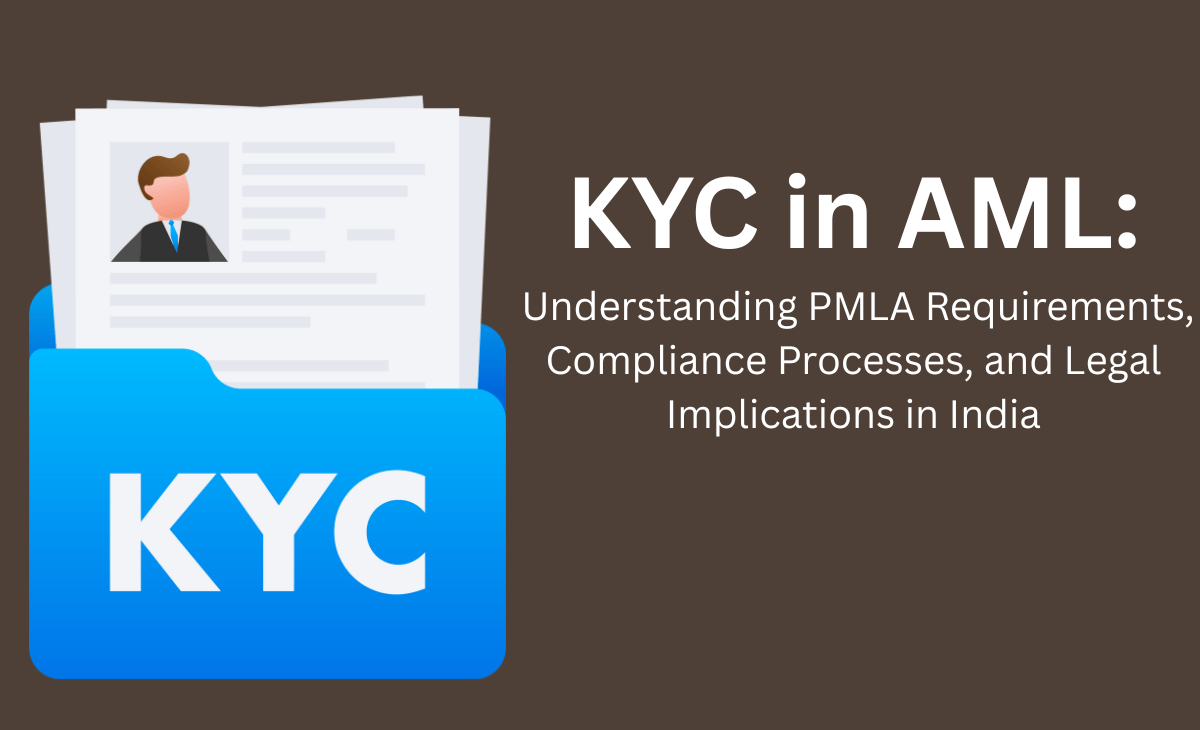
KYC in AML: Understanding PMLA Requirements, Compliance Processes, and Legal Implications in India
Key Takeaways
- Under the PMLA, banks opening savings, current or NRI accounts must collect government-issued identity proof (Aadhaar, PAN, passport, voter ID) and address proof (utility bill or rent agreement).
- Non-Resident Indians must submit visa-stamped passports and foreign address proof in addition to standard KYC documents, triggering enhanced due diligence by banks under PMLA regulations.
- Businesses must maintain KYC records, including customer IDs and transaction logs, for at least five years from the date of transaction completion as mandated by PMLA.
- Organizations should review and update their KYC policies annually—and quarterly for high-risk customer segments—based on RBI circulars, FIU-IND advisories, or material risk assessment changes.
- The designated compliance officer (Principal Officer) is legally required to oversee KYC implementation, conduct staff training, and report suspicious transactions to the Financial Intelligence Unit under PMLA.
KYC, or Know Your Customer, is vital for the banking sector in India under the Prevention of Money Laundering Act (PMLA). Understanding its requirements can save you from legal troubles.
When opening a bank account, specific identification and documentation are essential. You’ll learn what banks expect from you to meet these KYC standards.
Businesses must also comply with AML regulations related to KYC processes. We will break down the steps businesses need to follow to stay compliant.
For financial institutions, implementing KYC measures is crucial to prevent money laundering. We’ll discuss why KYC is important, backed by trends in the industry.
Regularly updating KYC policies is necessary due to changing regulations. I’ll share when organizations should review their policies to stay aligned with the law.
Lastly, it’s important to know who within a corporation is responsible for KYC compliance. We’ll clarify the roles of compliance officers and management in ensuring effective KYC practices.
Let’s dive deeper into these aspects of KYC and AML regulations and what they mean for you.
What Are the Key Requirements for KYC Under the PMLA in India When Opening a Bank Account?
Banks in India must collect specific documentation to meet Know Your Customer (KYC) requirements specified under the Prevention of Money Laundering Act (PMLA) when opening a new bank account. This documentation generally includes proof of identity and address.
What Are the Required Documents for KYC?
To open a bank account, customers must submit certain documents as part of the KYC process. Essential documents include:
- Proof of Identity:
- Aadhaar Card
- Passport
- Voter ID
- PAN Card
- Proof of Address:
- Utility bill (electricity, water)
- Bank statement
- Rent Agreement
- Passport-sized photographs.
This established document requirement aims to prevent identity fraud and ensure the true identity of the customer is verified.
Identification Verification Process
The identification verification process is crucial in KYC compliance. The bank typically uses the following steps:
- Collect all required documents.
- Authenticate the documents using government databases.
- Conduct a risk assessment based on customer background and business nature.
- Store verified documents securely.
Well-trained bank employees handle this process to ensure that they adhere to regulations.
What Are the KYC Requirements for Different Types of Accounts?
KYC requirements can differ based on the type of account. This table outlines the documentation needed:
| Type of Account | Proof of Identity | Proof of Address |
|---|---|---|
| Savings Account | Aadhaar Card, PAN Card | Utility bill, Bank Statement |
| Current Account | Voter ID, Passport | Rent Agreement, Utility bill |
| NRI Account | Passport, OCI (Overseas Citizen of India) | Bank Statements, Utility Bills |
Each type of account requires different combinations of documentation. Customers must ensure that they provide the appropriate paperwork.
Are There Additional Requirements for Non-Residents?
Yes, Non-Resident Indians (NRIs) have specific requirements for KYC compliance. Along with standard documents, NRIs must provide:
- Foreign address proof.
- A document proving their NRI status, such as the passport with a visa.
Banks may perform extensive verification for NRIs due to additional foreign regulations.
What Happens If KYC Requirements Are Not Met?
If customers fail to provide necessary KYC documentation, banks will not open the account. Compliance with PMLA is mandatory. Non-compliance might lead to:
- Account closure.
- Legal actions.
- Financial penalties for the bank.
Hayalments and procedures serve as a means of protection against fraud and money laundering.
Mini FAQ Section
What is the purpose of KYC in banking?
KYC helps banks verify customer identity and prevent illegal activities like money laundering.
Can I use a digital version of my documents for KYC?
No, physical copies of documents are usually required for verification unless the bank specifies otherwise.
How can I update my KYC information?
To update KYC information, you need to resubmit relevant documents and contact your bank.
Need Legal Assistance?
For a detailed understanding of KYC requirements and PMLA regulations, consult our legal experts. Keeping compliant helps safeguard your banking experience.
How Can Businesses Comply with AML Regulations Related to KYC Processes in India?
Businesses can comply with Anti-Money Laundering (AML) regulations concerning Know Your Customer (KYC) procedures by establishing a systematic approach to customer verification, monitoring, and record-keeping as required under the Prevention of Money Laundering Act (PMLA) in India.
What Are the Steps for KYC Compliance?
Following a structured process is essential for businesses to meet KYC requirements. The steps include:
- Identifying Customers: Gather identifying information such as name, address, and date of birth. This helps in recognizing the customer legally.
- Verifying Identity: Use government-issued identification like Aadhaar cards, passports, or voter ID cards to confirm identity.
- Understanding Customer’s Activities: Know the nature of the business or occupation to assess transaction risks.
- Ongoing Monitoring: Continuously monitor transactions against customer profiles to identify suspicious activity.
- Record Maintenance: Keep all KYC records for a minimum of five years after the completion of the transaction.
Complying with these steps helps mitigate risk for the business and aligns with legal requirements.
What Are the KYC Document Requirements?
When businesses collect KYC documentation, it’s important to follow a set format. The required documents generally include:
- Individual Customers:
- Government-issued ID proof
- Address proof (e.g. utility bill, rental agreement)
- Recent passport-sized photographs
- Corporate Customers:
- Certificate of incorporation
- Memorandum and Articles of Association
- List of directors and shareholders
Here’s a comparison table for different customer types and document requirements:
| Customer Type | Required Documents |
|---|---|
| Individual | ID proof, Address proof, Photograph |
| Corporate | Certificate of incorporation, MOA, List of directors |
Each customer type has specific requirements allowing businesses to align their compliance efforts more effectively.
How Can Businesses Conduct Risk Assessments?
Risk assessment is key in determining how businesses should approach KYC procedures. Here’s how to perform a risk assessment:
- Classify customers based on risk levels: High, Moderate, or Low.
- Conduct due diligence based on the risk classification.
- Adjust monitoring and reporting processes according to the detected level of risk.
This structured approach can help businesses allocate resources effectively and manage compliance better.
What Are the Consequences of Non-Compliance?
Failing to comply with KYC regulations can lead to serious consequences, including:
- Fines and Penalties: Regulatory authorities can impose hefty fines on non-compliant businesses.
- Legal Actions: Companies may face legal challenges that can tarnish their reputation.
- Loss of Business Licenses: In extreme cases, businesses may lose their licenses to operate.
Maintaining compliance not only protects the business but also upholds the integrity of the financial system.
Need Legal Assistance?
If your business requires help with AML regulations and KYC processes, consider seeking legal advice. Our firm specializes in compliance and can provide tailored solutions to meet your needs.
FAQs
What is the purpose of KYC in AML compliance?
KYC helps prevent money laundering and fraud by verifying customer identities and understanding their financial activities.
How often should KYC information be updated?
KYC information should be updated annually or more frequently if there is material change in a customer’s profile.
Can businesses rely solely on third-party KYC services?
While third-party services can assist, businesses must ensure they conduct their due diligence and remain compliant with regulatory requirements.
When Should Organizations Update or Review Their KYC Policies Under the PMLA to Ensure Compliance?
Organizations must regularly review their KYC policies to stay compliant with the Prevention of Money Laundering Act (PMLA) and any regulatory updates. Key scenarios necessitating updates include changes in regulations, identification of new risk factors, or changes in the business model.
What Regulatory Changes Require Policy Updates?
Changes in the law can impact KYC policies directly. Notifications from the Financial Intelligence Unit (FIU) or guidelines from the Reserve Bank of India (RBI) often signal required updates. Here are some examples of regulatory changes that require action:
- New laws or amendments to the PMLA
- Updates in customer due diligence guidance
- Changes in risk assessment protocols
Organizations must keep their KYC policies updated to remain compliant and avoid legal penalties.
What Risks Should Prompt a Review of KYC Policies?
Emerging risks may arise due to shifts in the market or economic environment. Specific scenarios to consider include:
- Introduction of new products or services
- Expanding into different geographical territories
- Significant changes in customer demographics
Regular assessments can prevent potential compliance failures and enhance risk management practices.
How Often Should Organizations Review Their KYC Policies?
Organizations should implement a timeline for periodic reviews. A general recommendation is to review policies at least once a year. However, businesses should review their KYC practices more frequently if they experience any of the situations below:
- Recent updates from regulatory bodies
- Increase in suspicious activity reports (SARs)
- Major changes in operational processes
What Steps Should Organizations Follow for KYC Reviews?
Organizations can follow a structured approach to review their KYC policies. Here’s a simplified checklist to guide the review process:
- Identify recent regulatory changes
- Assess current KYC processes against updated guidelines
- Update identification and verification methods as needed
- Train staff on new policies and procedures
- Document all changes made during the review
Following these steps will help organizations stay compliant and minimize risks.
What Are the Consequences of Neglecting KYC Policy Updates?
Ignoring KYC policy reviews can lead to severe consequences for organizations, including:
- Penalties and fines imposed by regulatory bodies
- Increased scrutiny from auditors and regulators
- Damage to reputation and loss of customer trust
Keeping KYC policies up to date is essential to maintain operational integrity and customer confidence.
Comparison of Review Frequencies for Different Risk Levels
| Risk Level | Review Frequency |
|---|---|
| Low Risk | Annually |
| Medium Risk | Biannually |
| High Risk | Quarterly |
This table summarizes suggested review frequencies based on the assessed risk level.
Need Legal Assistance?
If you have questions about updating your KYC policies, our firm is here to help. Contact us for guidance tailored to your specific needs.
Frequently Asked Questions
How can I find out if there are recent changes in KYC regulations?
Regulatory changes are often published in official government sources, including the websites of the RBI and FIU.
What documents should I maintain for KYC compliance?
Maintain records of identification, address proof, and any other documents as per regulatory requirements.
Can I conduct a KYC review internally?
Yes, organizations can conduct internal reviews. However, involving legal experts can provide additional assurance.
When Should Organizations Update or Review Their KYC Policies Under the PMLA to Ensure Compliance?
Organizations should update or review their KYC policies under the PMLA whenever there are regulatory changes, shifts in business operations, or new risk assessments.
What Regulatory Changes Prompt a Review of KYC Policies?
Changes in laws and regulations often necessitate updates to KYC policies. The Reserve Bank of India (RBI) may issue new circulars or guidelines. For instance, if the RBI revises customer identification requirements or expands the definition of high-risk customers, organizations must adjust their KYC processes accordingly.
How Do Internal Changes Affect KYC Policy Reviews?
Internal changes, such as merging with other companies, launching new products, or entering new markets, require a reassessment of KYC policies. If a bank decides to offer services to a demographic previously not targeted, it must ensure its KYC processes can handle the new customer profile.
What Triggers Risk Assessments for KYC Updates?
Periodic risk assessments help organizations identify evolving threats. If a company identifies a higher risk of money laundering in a specific area, it should reconsider customer verification steps. For example, an increase in fraudulent accounts may prompt a tighter review process.
Key Scenarios for KYC Policy Updates
- Changes in regulatory guidelines by the RBI or Finance Ministry.
- Expansion into high-risk sectors or geographical areas.
- Introduction of new banking products or services.
- Increased incidents of fraud or suspicious activity within the organization.
What Regular Intervals Should Organizations Follow for KYC Policy Reviews?
It’s advisable for organizations to conduct policy reviews at least annually. Regular reviews help ensure ongoing compliance and incorporate any new guidelines. However, after significant events or concerns, immediate updates are essential.
| Scenario | Action Required | Frequency |
|---|---|---|
| Regulatory Changes | Update KYC policies and procedures | As needed |
| Risk Assessment Changes | Reevaluate customer verification processes | Annually or as events dictate |
| Business Model Changes | Revise KYC policies to align with new operations | Before implementing new services |
| Signs of Increased Fraud | Tighten monitoring and update KYC measures | Immediately |
How Can Organizations Monitor Changes Effectively?
Establishing a compliance team can help monitor both external regulations and internal business changes. This team should stay updated on RBI guidelines and engage in risk assessments regularly.
Mini FAQ
How often should KYC policies be reviewed?
Organizations should review their KYC policies at least once a year, or more frequently if necessary.
What should trigger an immediate review of KYC policies?
Regulatory changes, incidents of fraud, or major business updates should lead to immediate reviews of KYC policies.
Who is responsible for KYC policy updates?
The organization’s compliance team is primarily responsible, along with senior management oversight.
Who Is Responsible for Ensuring Proper KYC Implementation Within Corporations Under Indian Law?
Every corporation in India is responsible for ensuring effective KYC implementation. The primary duty falls on the compliance officer, but management and various departments share this responsibility.
What Role Does the Compliance Officer Play?
The compliance officer leads KYC processes within the organization. This individual ensures that the corporation adheres to the requirements set by the Prevention of Money Laundering Act (PMLA).
Key responsibilities include:
- Monitoring KYC activities
- Training staff on KYC procedures
- Reviewing and updating KYC policies
- Reporting discrepancies to management
- Interacting with regulatory bodies
How Is Management Involved in KYC Compliance?
Management plays a crucial role by promoting a culture of compliance within the organization. They must support the compliance officer and oversee the overall KYC strategy.
Essential actions for management include:
- Providing necessary resources for KYC operations
- Supporting compliance training initiatives
- Ensuring timely audits of KYC practices
Are Other Departments Involved in KYC Processes?
Yes, other departments also participate in KYC compliance. Their involvement is vital for gathering and reporting information accurately.
Departments that contribute include:
- Human Resources: Handles employee background checks.
- Finance: Maintains transaction records for customers.
- Legal: Assists in understanding regulatory requirements.
What Legal Obligations Do Corporations Face?
Under the PMLA, corporations must maintain robust KYC processes. Failing to comply can lead to severe penalties, including prosecution and financial fines.
Key obligations include:
- Categorizing customers based on risk
- Collecting proper identification documents
- Updating KYC records periodically
How Are KYC Roles Distributed in Different Organizations?
Organizations may have different structures for KYC implementation. Below is a comparison table showing how roles may vary:
| Role | Responsibilities |
|---|---|
| Compliance Officer | Leads KYC efforts, ensures adherence to regulations |
| Internal Audit Team | Conducts periodic checks on KYC processes |
| IT Department | Manages software for KYC data storage and retrieval |
| Training Department | Educates employees on KYC policies and procedures |
What Are the Consequences of Non-Compliance?
Failure to implement proper KYC measures can result in significant penalties. These can include:
- Fines imposed by regulatory authorities
- Reputation damage
- Possible imprisonment for key personnel
Need Legal Assistance?
If your corporation needs help with KYC compliance, consider consulting a legal expert. Proper KYC implementation is vital to avoiding penalties.
Frequently Asked Questions
Who can be appointed as a compliance officer?
Any senior official with knowledge of KYC regulations can be appointed.
How often should KYC policies be reviewed?
At least once a year or when there are significant regulatory changes.
What are the common KYC verification methods?
Verification can be done through government-issued ID, utility bills, or bank statements.
Conclusion
Bottom Line
Understand KYC requirements under the PMLA to avoid legal issues and safeguard your banking experience.
To stay compliant, gather all required identity and address proof documents before opening a bank account. Review KYC policies annually or upon major changes to ensure ongoing compliance.
Businesses must regularly assess their KYC processes to adapt to new regulations and risks. Ensure that all departments collaborate on KYC implementation to avoid penalties.
By following these steps, you can navigate KYC requirements smoothly. Your understanding and compliance will protect both your interests and the integrity of the financial system. I encourage you to consult a legal expert for tailored guidance on KYC compliance.

Pratham is a legal information researcher and content creator dedicated to making Indian law accessible to everyone. With expertise in legal research and content development, Pratham creates detailed, well-researched articles on Indian laws to help readers understand complex legal concepts in simple language. All content is thoroughly researched from authentic legal sources including Indian statutes, court precedents, government publications, and established legal databases. Each article is fact-checked and updated regularly to reflect current laws and amendments.