Mutual Consent Divorce in India: A Step-by-Step Process, Timeline, and Essential Guidance

Key Takeaways
- Both spouses must jointly file a mutual consent divorce petition on grounds of irretrievable breakdown after living separately for at least one year, free from coercion or collusion.
- Filing requires five key documents: marriage certificate, government-issued identity proof, address proof, income proof (salary slips or ITR), and a lawyer-certified mutual consent petition.
- After the first hearing, the court mandates a six-month cooling-off period before the second motion, making the total mutual consent divorce timeline typically 6 to 18 months.
- The petition must be filed in the family court of your last common residence, the marriage location, or the current residence of either spouse to satisfy jurisdictional requirements.
- Engaging a family lawyer ensures accurate drafting of petitions, court representation during both motions, and skilled negotiation of asset division, maintenance, and child custody terms.
If you’re considering a mutual consent divorce in India, you likely have many questions. This type of divorce is all about both partners agreeing to part ways amicably, which makes it different from other divorce types.
In this post, I’ll guide you through the essentials of mutual consent divorce. We’ll cover the grounds for filing, the necessary documents, the expected timeline, and where to file your application.
I’ll also share tips on consulting a legal expert to help you through the process. By the end, you’ll have a clear understanding of what to expect as you navigate this challenging time.
What Are the Essential Grounds for Filing a Mutual Consent Divorce in India and How Do They Differ from Other Types of Divorce?
Mutual consent divorce in India is based on the agreement of both spouses to end their marriage amicably. Unlike other types of divorce, it requires both partners to jointly file for the divorce and disclose their decision without coercion.
What Are the Essential Grounds for Mutual Consent Divorce?
The primary ground for mutual consent divorce is the irretrievable breakdown of the marriage. Both spouses must agree that living together is no longer possible. The key aspects include:
- Both parties must jointly file a petition.
- They must have been living separately for a minimum period of one year.
- There should be no collusion or coercion involved.
This form of divorce focuses on cooperation rather than conflict. It is designed for couples who want to dissolve their marriage without going through a contentious divorce process.
How Does Mutual Consent Divorce Differ from Other Types of Divorce?
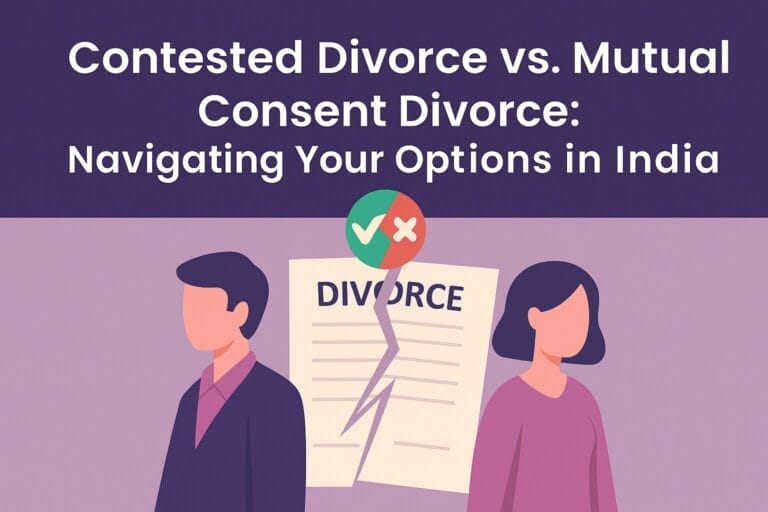
Mutual consent divorce differs significantly from contested divorce. In contested divorce, one partner files for divorce against the will of the other. This often leads to lengthy legal battles. Here’s a comparison:
| Aspect | Mutual Consent Divorce | Contested Divorce |
|---|---|---|
| Petition Filing | Joint petition | Single petition |
| Duration | Typically 6-18 months | Can take years |
| Agreement | Both spouses agree | One spouse wants it |
| Conflict Level | Low | High |
This table highlights how mutual consent divorce is quicker and involves less conflict, making it a preferred option for many couples.
Why Choose Mutual Consent Divorce?
Choosing mutual consent divorce offers several advantages. The process is simpler, faster, and less stressful. When both spouses agree:
- The division of assets can be mutually decided.
- Child custody arrangements can be negotiated.
- Both parties can maintain a cordial relationship post-divorce.
This approach reduces the emotional toll often experienced in contested divorces. It promotes peace and allows for better co-parenting arrangements.
What Are Common Challenges in Mutual Consent Divorce?
Even in a mutually agreed situation, challenges may arise. Some common issues include:
- Disagreements on asset division.
- Child custody disputes.
- Emotional challenges for both partners.
It is essential to address these issues upfront. Clear communication and legal guidance can help in overcoming such challenges.
Need Legal Assistance?
If you’re considering a mutual consent divorce and want to ensure all grounds and procedures are met, it’s wise to consult a legal expert. Capturing your agreement in a legal document is vital. Legal professionals can help navigate the complexities associated with divorce laws in India. They can assist in preparing the necessary documentation and represent your interests throughout the process.
Mini FAQ
1. How long do I need to be separated before filing for mutual consent divorce?
You need to be living separately for at least one year before you can file.
2. Can one spouse withdraw consent after filing?
Yes, one spouse can withdraw consent anytime before the final decree is granted.
3. Is mutual consent divorce less expensive?
Typically, yes, as it involves fewer legal fees compared to contested divorces due to less complexity in the process.
How Do You Prepare for the Filing Process of Mutual Consent Divorce in India, and What Documents Are Required at Each Step?
To prepare for a mutual consent divorce in India, both spouses must agree on the decision and gather the necessary documents. This process includes preparing a petition for divorce, mutually settling issues like child custody, maintenance, and property division.
What Initial Steps Should Be Taken?
The first step involves discussion between both partners. It is crucial to ensure that both are on the same page regarding the divorce. Here’s a checklist of initial steps:
- Both spouses must agree to file for mutual consent divorce.
- Discuss and finalize terms for child custody and maintenance.
- Determine the division of assets and liabilities.
What Documents Are Needed?
Gathering proper documentation is key for the filing process. Here’s a list of the essential documents required:
- Marriage certificate: This shows proof of your marriage.
- Address proof: This could be an Aadhaar card, passport, or utility bill.
- Identification proof: Use voter ID, passport, or any government-issued ID.
- Income proof: Salary slips or income tax returns might be necessary.
- Mutual consent petition: Drafted by both partners and certified by a lawyer.
Each couple’s situation is unique, so additional documents may be needed based on circumstances.
What Is the Process from Filing to Finalization?
Once you have your documents ready, follow these general steps for filing:
- File the joint petition at the family court.
- Receive a date for the first hearing.
- Attend the hearing to present your case.
- If accepted, the court will allow a cooling-off period of six months.
- After the period, attend the second hearing.
- Finally, the court issues a decree of divorce.
What Should You Keep in Mind During the Process?
Understanding specifics can ease the worry during the process. Here are some points to consider:
- Make sure the mutual consent petition accurately reflects your agreement.
- Prepare to answer any questions from the court during hearings.
- Be patient; the entire process may take several months.
How Does This Compare to Other Types of Divorce?
It’s helpful to compare mutual consent divorce with other types of divorce, such as contested divorce. Here’s a simple table for clarity:
<td=6-18 months
| Criteria | Mutual Consent Divorce | Contested Divorce |
|---|---|---|
| Agreement | Both parties agree | One party does not agree |
| Time Frame | Can take years | |
| Complexity | Basic legal process | Often complicated |
| Cost | Lower legal fees | Higher legal fees |
Need Legal Assistance?
Preparing for a mutual consent divorce can feel overwhelming. Seeking legal help is wise. A law firm can assist by helping with paperwork and guiding through the hearings. They can also provide advice tailored to specific situations. Getting a knowledgeable attorney simplifies the process.
Frequently Asked Questions
- How long does it take to finalize a mutual consent divorce? It generally takes six months after filing, but this can vary.
- Is mediation required? It is not mandatory, but it can help resolve disputes amicably.
- What happens if one spouse changes their mind? If one spouse withdraws consent, a contested divorce may need to be filed.
When Can You Expect the Entire Process of a Mutual Consent Divorce to Be Completed, From Filing to Final Decree?
You can typically expect the mutual consent divorce process in India to take approximately 6 months to 18 months. This time frame includes both the filing of the petition and the final decree. The entire process depends on multiple factors, such as court schedules and any delays in documentation.
What Steps Are Involved in the Mutual Consent Divorce Process?
The mutual consent divorce process includes several clear steps:
- Filing the Petition: Couples jointly file a petition in the Family Court where they last resided together.
- First Motion: After filing, the court will schedule a hearing for the first motion. Here, the couple appears before the judge to confirm their decision to divorce.
- Cooling-off Period: The court typically mandates a cooling-off period of 6 months. This period allows the couple to reconsider their decision.
- Second Motion: Post the cooling-off period, the couple files the second motion. Both parties need to express their intent to continue with the divorce.
- Final Decree: If the court is satisfied with the submissions, it grants the final divorce decree. This decree finalizes the divorce.
How Does the Timeline for Mutual Consent Divorce Compare to Other Forms of Divorce?
The timeline for mutual consent divorce is generally more straightforward compared to contested divorce cases. Here’s a comparison:
| Type of Divorce | Estimated Timeline | Complexity |
|---|---|---|
| Mutual Consent Divorce | 6 to 18 months | Low |
| Contested Divorce | 1 to 5 years | High |
The mutual consent divorce process is faster because both parties agree and cooperate. In contrast, a contested divorce involves disagreements, which can lead to prolonged legal battles.
What Factors Can Affect the Duration of the Divorce Process?
Several factors can influence how long the mutual consent divorce takes:
- Court Availability: Busy family courts can lead to longer waiting times for hearings.
- Completeness of Documents: Missing paperwork can delay the process.
- Compliance with the Cooling-off Period: Courts strictly follow this mandatory period.
- Judicial Workload: High workloads may slow the court’s processing time.
Being organized and cooperative can help expedite the process. Couples should ensure that all documents are prepared in advance, as lack of readiness can cause delays.
Is a Cooling-off Period Always Required?
Yes, the cooling-off period is generally required in India unless specific conditions warrant its waiver. For example, if there are serious issues like domestic violence, courts may skip this waiting period. Each situation is assessed case by case.
Need Legal Assistance?
If you’re interested in filing for mutual consent divorce, it’s wise to consult a legal professional. A lawyer can assist in gathering documents, navigating court procedures, and ensuring that your interests are protected.
FAQ
- Do both spouses need to be present during all hearings?
Yes, both parties must attend every hearing unless given special permission by the court. Can the cooling-off period be waived?
Yes, in some cases, if there are compelling reasons like abuse or immediate threats, the court may waive it.What happens if one spouse changes their mind during the process?
If one spouse decides not to proceed, the process will typically halt. The couple will need to resolve their differences before proceeding further.
Where Should You File Your Application for Mutual Consent Divorce, and What Are the Jurisdictional Considerations That May Affect Your Case?
You should file your application for mutual consent divorce in the family court where the couple last resided together. Jurisdiction may also depend on the location of the marriage or the current residence of either spouse. Each situation can have specific legal effects based on these factors.
What is Jurisdiction and Why Does It Matter?
Jurisdiction refers to the authority of a court to hear and decide a case. For mutual consent divorce, it determines the appropriate court for filing the application. Jurisdiction can impact how quickly a case is processed and where hearings will take place.
Where to File Your Divorce Application?
You have several options for filing your application:
- In the family court of the place where you last lived together.
- In the family court of the place where the marriage took place.
- In the family court of the current residence of either spouse.
Jurisdictional Considerations
Jurisdiction can affect your divorce case in these ways:
- Location of Residence: The couple must file in the proper court based on where they live.
- Previous Residence: If the couple lived together in multiple locations, the court can be chosen based on the last common residence.
- Marriage Location: The court may also have jurisdiction if the marriage took place in that area.
Comparison Table: Jurisdictional Filing Options
| Court Option | Description | Example |
|---|---|---|
| Last Common Residence | Where you last lived together as a couple. | The couple lived in Mumbai until separation. |
| Marriage Location | Where the marriage ceremony took place. | The couple got married in Delhi. |
| Current Residence | Where either spouse currently resides. | One spouse moves to Bengaluru. |
Steps for Filing a Mutual Consent Divorce
Here’s a simplified process you can follow:
- Decide on the appropriate family court based on jurisdiction.
- Gather required documents, including marriage certificate and identity proofs.
- Draft and file the petition for mutual consent divorce.
- Attend the first hearing as scheduled by the court.
- Complete the second motion after the required cooling-off period.
- Receive the final decree of divorce.
Need Legal Assistance?
It’s important to consult a lawyer to navigate the jurisdictional nuances effectively. A legal expert can help you understand where to file based on your specific circumstances. They can also guide you through the documentation and represent you in court.
Mini FAQ
Q: Can I file for mutual consent divorce in a different city?
A: Yes, if one spouse currently resides there, it is possible.
Q: What happens if we filed in the wrong court?
A: The case may be dismissed or transferred to the correct court.
Q: Is there a specific time frame to file for divorce?
A: There is no set time frame, but it is advisable to file as soon as both parties agree.
Who Should You Consult for Legal Guidance in the Mutual Consent Divorce Process, and How Can They Help You Navigate Legal Complexities?
To navigate the mutual consent divorce process in India successfully, it is essential to consult a family lawyer who specializes in divorce cases. A qualified lawyer can provide vital legal guidance, assist with documentation, and represent you in court. They make the intricate process simpler and smoother, ensuring that all legal obligations are met accurately.
Why Is a Family Lawyer Important?
A family lawyer plays a crucial role in your divorce. They help you understand your rights and responsibilities. Here are some reasons why hiring a family lawyer is important:
- Expertise in Family Law: Lawyers focus on family law, making them familiar with all legal requirements.
- Document Preparation: They can help gather and prepare necessary documents, reducing errors.
- Court Representation: A lawyer can represent you during proceedings, ensuring your interests are protected.
- Negotiation Skills: They can negotiate terms, such as financial settlements or child custody, for a fair outcome.
What Are the Steps to Take When Choosing a Lawyer?
Selecting the right lawyer can greatly affect your divorce experience. Here are steps to consider:
- Research: Look for family lawyers in your area with experience in mutual consent divorce.
- Check Reviews: Read client reviews or testimonials to gauge their reputation.
- Initial Consultation: Schedule a meeting to discuss your case. Many lawyers offer free consultations.
- Discuss Fees: Understand the fee structure and payment plans before hiring.
- Compatibility: Ensure you feel comfortable and can communicate openly with the lawyer.
What Legal Services Can You Expect from Your Lawyer?
Your family lawyer will provide several essential services throughout the divorce process. This includes:
- Advice on Legal Rights: They inform you about your rights related to property, maintenance, and custody.
- Filing Petitions: Your lawyer will draft and file all petitions needed for the mutual consent divorce.
- Counsel on Mediation: A lawyer can suggest mediation to help resolve disputes amicably.
- Final Documentation: They ensure that all final agreements are correctly drafted and presented to the court.
| Service Offered | Details | Importance |
|---|---|---|
| Legal Advice | Understanding rights and obligations | Prevents mistakes and ensures fair treatment |
| Document Filing | Preparation of necessary legal papers | Reduces the chance of errors |
| Court Representation | Appearing on your behalf during hearings | Ensures your interests are advocated |
| Negotiation | Settling terms amicably | Avoids lengthy court battles |
What Are the Costs Involved in Hiring a Family Lawyer?
Understanding the costs associated with hiring a lawyer is vital. Legal fees can vary based on several factors, including the complexity of the case and the lawyer’s experience. Generally, you may encounter:
- Consultation Fees: Some lawyers charge for the first meeting.
- Retainer Fees: An upfront fee to start the process.
- Hourly Rates: Costs per hour for ongoing legal services.
- Flat Fees: A set amount for the entire mutual consent divorce process.
How to Prepare for the First Meeting with Your Lawyer?
Preparation for your first meeting will help maximize the time spent with your lawyer. Consider doing the following:
- Gather relevant documents like marriage certificates and financial records.
- Write down a list of questions you have regarding the process.
- Be ready to discuss the details of your case openly.
Need Legal Assistance?
If you are considering a mutual consent divorce, seeking legal help is crucial. A knowledgeable family lawyer can simplify this challenging time and help you make informed decisions. Contact our firm to speak with a qualified attorney who can walk you through the mutual consent divorce process in India.
Frequently Asked Questions
Q1: Can I proceed with a mutual consent divorce without a lawyer?
A: While you can technically proceed without legal assistance, it’s highly advisable to consult a lawyer to avoid pitfalls.
Q2: How long does the consultation usually take?
A: Most initial consultations last between 30 minutes to 1 hour, depending on the complexity of your case.
Q3: What if my spouse does not agree to the mutual consent divorce?
A: If your spouse does not agree, you may need to consider other divorce types, like contested divorce, which may require different legal strategies.
Conclusion
A mutual consent divorce is typically faster and less stressful than other divorce types in India.
If you are considering mutual consent divorce, start by discussing your decision with your spouse. Make sure both of you agree on terms like asset division and child custody.
Next, gather the required documents, including your marriage certificate and identification proofs. Be ready to file your joint petition at the appropriate family court.
Remember, it’s wise to consult a family lawyer to guide you through the process. Their expertise can help you avoid common pitfalls and ensure everything is handled correctly.
Navigating your mutual consent divorce doesn’t have to be overwhelming. With the right support and preparation, you can move on to the next chapter of your life confidently.


Pratham is a legal information researcher and content creator dedicated to making Indian law accessible to everyone. With expertise in legal research and content development, Pratham creates detailed, well-researched articles on Indian laws to help readers understand complex legal concepts in simple language. All content is thoroughly researched from authentic legal sources including Indian statutes, court precedents, government publications, and established legal databases. Each article is fact-checked and updated regularly to reflect current laws and amendments.