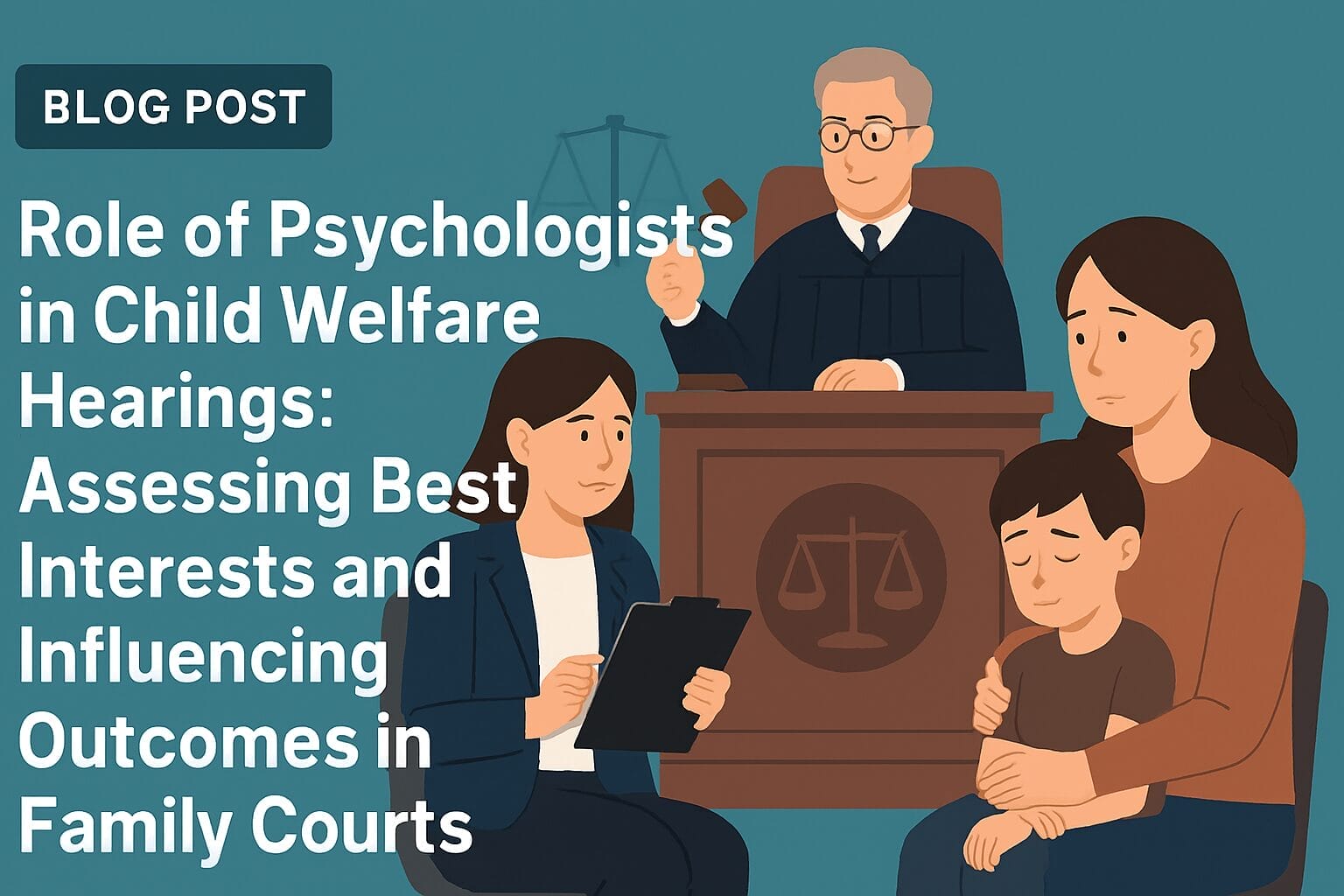
Role of Psychologists in Child Welfare Hearings: Assessing Best Interests and Influencing Outcomes in Family Courts

Key Takeaways
- Under the Family Courts Act, 1984, family courts prioritize a child’s welfare and may appoint RCI-registered psychologists whose evaluations significantly shape custody decisions.
- The Guardians and Wards Act, 1890, and Juvenile Justice (Care and Protection of Children) Act, 2015 empower judges to admit psychologists’ expert testimony as critical evidence in custody and welfare hearings.
- Indian family courts require psychologists to hold a doctoral degree (PhD/PsyD), valid Rehabilitation Council of India licensure, and substantive experience in child psychology for courtroom credibility.
- Psychologists perform initial consultations, home observations, and standardized tests, scheduling assessments 2–4 weeks before a welfare hearing and submitting their report 1–2 weeks prior.
- High Court or Family Court judges assess psychologists’ qualifications—educational credentials, RCI registration, and prior testimony—to ensure reliable, unbiased expert opinions in child welfare cases.
Psychologists play a key role in child welfare hearings by assessing a child’s best interests. Their insights help family courts make informed decisions about custody and care.
Expert testimony from psychologists can significantly shape the outcomes of these sensitive cases. This is especially true in India, where the emotional and psychological well-being of a child is paramount.
Involving a child psychologist during custody disputes is crucial for several reasons. They can provide valuable perspectives that courts may not fully grasp without professional input.
Parents should consider seeking a child psychologist’s advice before a welfare hearing. The process can prepare them for what lies ahead and ensure their child’s needs are well represented.
It’s also important to know who assesses the qualifications of these psychologists. This impacts the credibility of their opinions, which can influence court decisions.
What Role Do Psychologists Play in Assessing the Best Interests of a Child During Welfare Hearings in Family Courts?
Psychologists evaluate a child’s emotional and mental health to help determine their best interests during welfare hearings. Their involvement ensures that the child’s needs are prioritized in legal decisions. These professionals provide insights through assessments, observations, and expert testimony in court.
Why Are Psychologists Important in Family Courts?
Psychologists contribute to family court proceedings by applying their expertise to understand a child’s welfare. They conduct evaluations to assess parental capabilities, the child’s emotional state, and the overall family dynamics. This information is vital for judges when deciding custody and care arrangements.
- Psychologists use standardized assessments to gauge a child’s cognitive and emotional development.
- They can identify any trauma or psychological issues affecting the child’s wellbeing.
- Their insights assist in creating healing and supportive environments post-hearing.
What Legal Framework Governs Psychologists’ Assessments in Family Courts?
In India, Family Courts operate under the Family Courts Act, 1984, which emphasizes the welfare of the child as a primary focus. The Act mandates that when dealing with a child’s custody, the court must consider various factors.
- The welfare of the child is paramount.
- Courts can appoint psychologists to assess circumstances and provide actionable reports.
- Recommendations made by psychologists carry considerable weight in judicial decisions.
Psychologists’ findings often influence whether a child remains with one parent, the nature of visitation rights, and additional care arrangements. This legal backing enhances the credibility of the evaluations provided.
How Do Psychologists Conduct Their Evaluations?
Psychologists follow a structured procedure to ensure their evaluations are thorough and unbiased. Common steps in their assessment include:
- Initial interviews with parents and the child.
- Observations of family interactions.
- Standardized testing for emotional and cognitive development.
- Review of historical information, including any past psychological issues.
These assessments result in a comprehensive report that outlines findings and recommendations tailored to the child’s best interests.
| Aspect | Child Arrangements | Factors Considered | Timeline |
|---|---|---|---|
| Sole Custody | One parent has full rights | Parent’s stability, child’s needs | Several months |
| Joint Custody | Parents share rights | Communication ability, cooperation level | 6 months to 1 year |
| Supervised Visitations | Restricted visits | Safety and emotional impact | Varies greatly |
What Qualifications Do Psychologists Need for Family Court Involvement?
Not all psychologists are suited for assessments in family court. Qualifications include:
- A doctoral degree in psychology (PhD/PsyD).
- Licensure from a recognized body, such as the Rehabilitation Council of India (RCI).
- Experience in child psychology and family dynamics.
Even with proper credentials, the court will also evaluate their past cases and client testimonials.
Important Points Parents Should Know
Parents navigating family court hearings should be aware of several essential points regarding psychologists:
- Engage a psychologist early, if possible, to get a better perspective before hearings.
- Understand that evaluations can influence court decisions significantly.
- Provide accurate and honest information during evaluations to ensure reliable results.
Need Legal Assistance?
If you face child custody issues and need a psychologist’s evaluation, consider reaching out to a family law specialist. It can make a difference in achieving a favorable outcome.
Frequently Asked Questions
What should parents expect during a psychologist’s evaluation?
Parents can expect interviews, standardized tests for the child, and family observations. The process usually takes a few sessions.
How can parents prepare their child for an evaluation?
Parents can explain the process in simple terms, ensuring the child understands they are safe and these evaluations are meant to help them.
Can children express their preferences during evaluations?
Yes, children can share their preferences, especially if they are over the age of 12, but the focus remains on their overall wellbeing.
How Can A Psychologist’s Expert Testimony Influence the Outcome of Child Welfare Cases in India?
Psychologists play a crucial role in child welfare cases. Their expert testimony can significantly impact decisions made by the court regarding custody and care arrangements for children.
What Is the Role of Expert Testimony?
Expert testimony from psychologists offers insights into a child’s emotional and psychological state. This testimony can help judges understand the complexities of a child’s needs. It provides valuable data that assists the court in determining what is in the best interest of the child.
- Psychologists use standardized tests and interviews to evaluate a child’s mental health.
- They assess parental fitness and the home environment.
- Their reports include recommendations for custody and caregiving.
This information helps the court make more informed decisions. A psychologist’s perspective can highlight factors that may not be evident through traditional evidence. For example, they can provide insight into how a child has been affected by parental conflict.
Legal Framework Surrounding Expert Testimony
In India, the legal framework allows psychologists to be part of family court proceedings under the Guardians and Wards Act, 1890. This act emphasizes the welfare of the minor as the primary consideration in custody decisions. Additionally, The Juvenile Justice (Care and Protection of Children) Act, 2015 provides guidelines on assessments and interventions by professionals.
- The court can appoint a psychologist to assess family dynamics.
- Judges rely on reports from these professionals to make decisions.
- The opinion of a psychologist can carry significant weight in court.
The acceptance of psychological evaluations as evidence ensures that decisions consider the child’s psychological needs as well. Courts often give more credence to expert opinions, especially when they come from recognized professionals with relevant qualifications.
Examples of Influence in Specific Cases
Several cases illustrate how psychologist input shapes outcomes in child welfare hearings. For instance, in a custody matter where one parent was accused of neglect, a psychologist’s analysis revealed the child thrived in a stable environment. This testimony led to a ruling in favor of granting custody to the more stable parent.
- In another case, a psychologist assessed the emotional condition of a child exposed to a high-conflict situation. The psychologist’s report emphasized the damage caused by such an environment. The court took this into account when determining visitation rights, ensuring minimal exposure to conflict.
Here is a comparison table to illustrate different types of custody cases and how a psychologist’s role varies:
| Custody Type | Psychologist’s Role | Possible Outcomes |
|---|---|---|
| Joint Custody | Assess family dynamics; suggest co-parenting strategies | Encourage collaboration between parents |
| Sole Custody | Evaluate emotional impact on the child | Recommendation of one ideal custodial parent |
| Visitation Rights | Determine safety during visits; assess parental behavior | Guidelines set for safe visitation |
Key Steps in Involving a Psychologist
Parents can take specific steps to ensure a psychologist’s input is effectively utilized in court proceedings.
- Select a qualified psychologist with experience in child welfare and custody evaluations.
- Schedule assessments early in the process, allowing time for thorough evaluation.
- Provide relevant information about the child’s history and family situation to the psychologist.
- Prepare for court hearings where the psychologist will provide testimony and recommendations.
These steps can lead to a more favorable outcome for children involved in welfare hearings.
Need Legal Assistance?
If you are involved in a child custody case, consult a lawyer with expertise in family law and child welfare. They can guide you on how to effectively incorporate a psychologist’s testimony into your case.
FAQs
What should I look for in a psychologist for my child?
You should find someone experienced in child psychology and legal evaluations. Check credentials and background.
How long does a psychological evaluation take?
It usually takes several sessions; the total time can range from a few weeks to a couple of months.
Can I challenge a psychologist’s assessment in court?
Yes, if you believe the evaluation is biased or inaccurate, you can request a second opinion or present counter-evidence.
Why Is It Important to Involve a Child Psychologist in Court Proceedings Related to Child Custody and Caregiving Arrangements?
Involving a child psychologist in court proceedings related to child custody and caregiving arrangements is essential. They provide insights into a child’s emotional and psychological needs, ultimately guiding the court in making decisions that serve the child’s best interests.
How Do Psychologists Assess a Child’s Needs?
Psychologists use various methods to assess a child’s emotional and mental health. They observe behaviors, conduct interviews, and administer standardized tests. These assessments help determine the child’s ability to cope with different living situations. The psychologist’s evaluation is critical in court because it gives a clear picture of the child’s emotional world.
Child psychologists may focus on:
– Emotional health: Understanding feelings, fears, and anxieties.
– Social skills: Assessing the child’s ability to interact with peers and adults.
– Developmental milestones: Evaluating if the child is developing appropriately for their age.
What Legal Framework Governs Child Custody in India?
In India, the legal framework for child custody is primarily found in the Hindu Minority and Guardianship Act, 1956, and the Guardians and Wards Act, 1890. Both laws emphasize the child’s welfare as the paramount consideration. Courts may refer to psychological assessments when deciding custody arrangements.
Key points include:
– Best Interest of the Child: Courts prioritize what is best for the child, based on evidence presented, including psychologist reports.
– Parental Fitness: Assessments can reveal if a parent is suitable for custody based on emotional stability.
What Role Does a Psychologist Play in Court Hearings?
During court hearings, child psychologists may serve as expert witnesses. They offer testimonies based on their evaluations, illuminating the child’s emotional state and the implications of custody decisions. Their expert testimony can clarify complex issues for the judge.
Additionally, psychologists may provide recommendations regarding:
– Visitation rights: How often and under what conditions parents may see their child.
– Therapeutic interventions: If a child needs therapy to cope with trauma or anxiety.
How Does Involvement of a Psychologist Benefit the Child?
The involvement of a psychologist can significantly benefit the child during court proceedings. It fosters a comprehensive understanding of the child’s needs and can help prevent further emotional distress.
- Emotional Safety: Psychologists ensure the child feels safe and understood during stressful court interactions.
- Child-Centered Recommendations: They offer suggestions that focus on healthy emotional development and stability.
| Aspect | Psychological Assessment | Legal Decision |
|---|---|---|
| Focus | Child’s emotional needs | Child’s best interests |
| Outcome | Therapeutic recommendations | Custody arrangements |
| Participants | Child psychologist | Family court judge, parents |
What Steps Should Parents Take to Involve a Psychologist?
When considering involving a child psychologist, parents can follow these steps:
1. Research Qualified Psychologists: Look for those specializing in child assessments.
2. Set Up an Initial Consultation: Discuss the child’s needs and the reason for involvement.
3. Review Assessment Results Together: Understand the findings and recommendations before court proceedings.
4. Prepare The Child: Explain to the child what to expect in a way they can understand.
5. Include Psychologist in Court Hearings: Ensure they are available to provide testimony and insights.
Myths About Child Psychologists in Family Court
- Myth: Child psychologists are biased towards one parent.
- Fact: Psychologists act independently and prioritize the child’s well-being over parental conflicts.
- Myth: Psychological evaluations are only for troubled families.
- Fact: They can benefit all families undergoing custody changes, ensuring the child’s voice is heard.
Need Legal Assistance?
If you are facing a child custody case, getting professional legal guidance can be invaluable. Our law firm specializes in family law and can help you navigate the complexities of child custody arrangements. Reach out for support and expert advice.
When Should Parents Seek the Services of a Child Psychologist Before a Welfare Hearing, and What Should They Expect from the Process?
Parents should seek the services of a child psychologist well before a welfare hearing. This timing allows a thorough assessment of the child’s emotional and psychological needs, weighing heavily in court decisions.
What Factors Should Prompt Parents to Consult a Child Psychologist?
Parents should consider engaging a child psychologist if they notice any of the following factors:
– Behavioral Changes: Significant changes in the child’s behavior can indicate stress or trauma.
– Emotional Distress: Signs of anxiety or depression in a child need professional input.
– Custody Disputes: In the context of custody disputes, a psychologist’s view can be vital.
– Legal Requirements: In some cases, courts may require psychological evaluations as part of the custody process.
By approaching a psychologist early on, parents gain insights that will help shape their approach in court.
What Happens During the Assessment Process?
The assessment process typically includes several stages:
1. Initial Consultation: Parents and the psychologist meet to discuss the child’s behavior and the situation.
2. Observation: The psychologist may observe the child in different environments.
3. Testing: Standardized tests are used to evaluate the child’s emotional and cognitive functioning.
4. Reporting: A detailed report is prepared, summarizing findings and recommendations.
Parents can expect a thorough evaluation, leading to a report that can bolster their case in court.
What Can Parents Expect from a Child Psychologist’s Involvement?
Parents can expect the psychologist to provide:
– Expert Opinions: Professional insights regarding the child’s needs and best interests.
– Supportive Context: An accurate context for the child’s experiences, benefiting the court’s understanding.
– Recommendations: Clear, actionable recommendations regarding custody or care arrangements.
This supportive input can immensely influence the court’s view of the situation.
Key Timeline: When to Consult a Child Psychologist
| Phase | Timeline | Action Required |
|---|---|---|
| Initial Concerns | As soon as issues arise | Consult a psychologist immediately. |
| Assessment | 2-4 weeks before hearing | Complete testing and follow-up consultations. |
| Report Preparation | 1-2 weeks before hearing | Obtain a psychology report with findings. |
| Presentation in Court | At the welfare hearing date | Ensure the psychologist is available to testify. |
This table provides a clear timeline for parents, ensuring they engage with a psychologist promptly.
What Qualifications Should Parents Look for in a Child Psychologist?
When choosing a child psychologist, parents should consider the following:
– Experience with Children: Look for psychologists specializing in child behavior.
– Credentials: Ensure the psychologist has a valid license and relevant qualifications.
– Reviews and Testimonials: Previous clients’ feedback can offer valuable insights.
Having a qualified psychologist can greatly increase the chance of favorable outcomes in court.
Need Legal Assistance?
If you’re navigating a welfare hearing, our law firm can help you understand the role of psychologists in your case. Seeking advice from experienced professionals can make a big difference.
Frequently Asked Questions
How long does the assessment process take?
The assessment generally takes between 2 to 4 weeks, depending on the child’s needs.
Can I choose any psychologist?
It’s important to choose a licensed psychologist who specializes in child psychology.
Will the psychologist testify in court?
Yes, if required, they can testify to provide their expert opinion on the child’s best interests.
Who Determines the Qualifications and Credibility of Psychologists Involved in Child Welfare Hearings, and Why Does This Matter?
The High Court or Family Court judges typically determine the qualifications and credibility of psychologists involved in child welfare hearings. This decision is crucial as it impacts the quality of testimony and recommendations made during the proceedings.
What Qualifications Do Psychologists Need for Family Court?
Psychologists must meet certain educational and professional standards to be accepted in family court. Key requirements include:
- A doctoral degree in psychology from a recognized institution.
- Relevant post-graduate training in child psychology or related fields.
- Experience in assessing children’s mental health and behavior.
- Proper registration with the Rehabilitation Council of India or equivalent authority.
These requirements ensure that psychologists have the necessary expertise to evaluate a child’s needs effectively.
Why Is Credibility Important in Family Court Hearings?
Credibility directly impacts a psychologist’s ability to influence a court’s decision. A credible psychologist provides reliable insights on the best interests of the child. This is essential for the judge to make informed choices regarding custody or welfare. Factors that enhance credibility include:
- A strong educational background.
- Extensive experience with child welfare cases.
- Previous court appearances and successful testimonies.
- Good reputation among legal professionals and peers.
A credible psychologist’s input can shape the outcome of custody battles or welfare proceedings. If a court doubts a psychologist’s qualifications, their testimony may carry less weight.
How Is a Psychologist’s Testimony Used in Court?
Psychologists may provide expert opinions and evaluations regarding a child’s mental well-being. Their roles include:
- Conducting psychological assessments, including interviews and standardized tests.
- Observing family dynamics.
- Analyzing the child’s behavior in different settings.
- Offering recommendations for custody and visitation arrangements.
A psychologist’s findings can highlight potential risks or advantages associated with various caregiving options.
Comparing Different Types of Assessments
Here is a comparative table highlighting various assessments a psychologist may conduct during child welfare hearings:
| Assessment Type | Purpose | Method |
|---|---|---|
| Psychological Evaluation | Assess mental health status | Interviews, tests, observations |
| Parenting Capacity Assessment | Evaluate parent suitability | Family observations, interviews |
| Child Custody Evaluation | Determine child’s best interests | Home visits, parent-child interactions |
Each type of assessment serves a specific purpose and aids the court in making a sound decision.
What Are the Procedures for Psychologists in Family Court?
Psychologists generally follow established procedures in family court. Steps include:
- Reviewing case history and relevant documents.
- Conducting interviews with parents and children.
- Observing interactions and behaviors in both settings.
- Preparing a comprehensive report for the court.
- Testifying during hearings about findings and recommendations.
Following these procedures allows psychologists to present accurate and informed insights to the court.
Need Legal Assistance?
If you are involved in a family court case, consulting a qualified psychologist is advisable. A skilled lawyer can also guide you through the process. Understanding the role of psychologists can make a significant difference in child welfare hearings.
Frequently Asked Questions
Do all family court cases require a psychologist?
Not all cases require a psychologist, but many do benefit from their insights, especially in custody matters.
Can parents choose which psychologist to consult?
Yes, parents can choose a psychologist, but the court must approve the expert’s qualifications before testimony is accepted.
How can I check a psychologist’s credentials?
You can verify a psychologist’s registration with relevant authorities in India, like the Rehabilitation Council of India.
Utilizing a qualified psychologist can greatly benefit the child in welfare hearings. Their expertise can clarify complex family dynamics and lead to better outcomes.
Conclusion
Involving a qualified child psychologist in custody hearings is vital for protecting a child’s best interests.
To ensure the best outcome for your child, consult with a family law attorney today. Consider gathering any pertinent documents related to the child’s behavior and emotional needs. It may also be beneficial to reach out to a child psychologist for an assessment as early as possible.
Psychologists play a critical role in family court, focusing on the emotional and mental health of children. Their expert evaluations inform custody decisions, emphasizing a child’s welfare as paramount. Proper qualifications and credibility of psychologists enhance the weight of their recommendations in court.
Engaging a psychologist and legal counsel can significantly influence your case. You can navigate this complex process with confidence and ensure your child’s needs are prioritized.

Pratham is a legal information researcher and content creator dedicated to making Indian law accessible to everyone. With expertise in legal research and content development, Pratham creates detailed, well-researched articles on Indian laws to help readers understand complex legal concepts in simple language. All content is thoroughly researched from authentic legal sources including Indian statutes, court precedents, government publications, and established legal databases. Each article is fact-checked and updated regularly to reflect current laws and amendments.