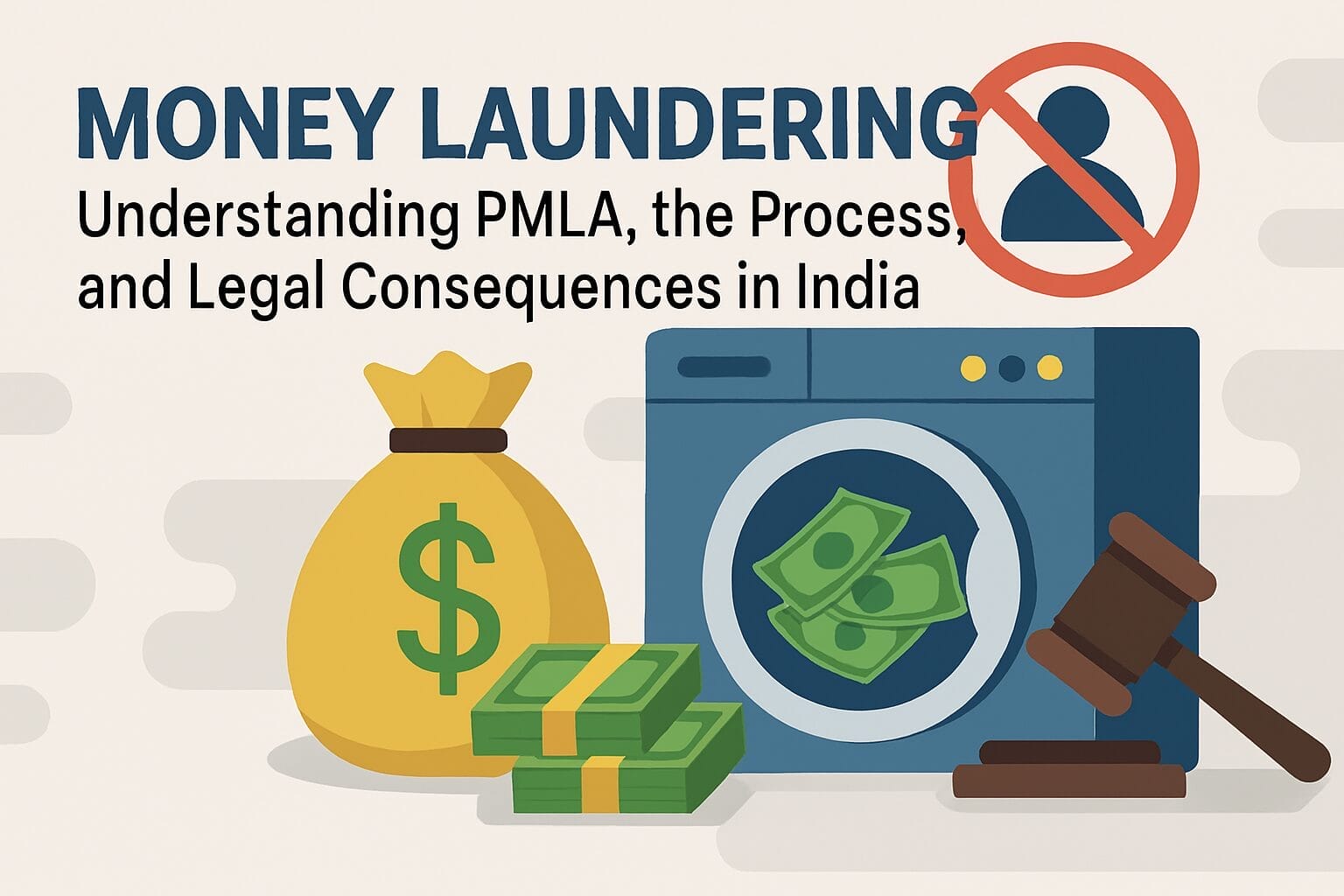
Money Laundering: Understanding PMLA, the Process, and Legal Consequences in India

Key Takeaways
- Under PMLA, any person who knowingly conceals, converts, transfers, or handles proceeds of crime is deemed accused of money laundering.
- Money laundering convictions under PMLA attract 3 to 7 years’ imprisonment, fines up to five times the laundered amount, and attachment of properties derived from crime.
- Upon investigation initiation, the Enforcement Directorate must issue provisional attachment and freeze orders within 30 days and file its chargesheet within 60 days.
- Banks and financial institutions must file Suspicious Transaction Reports with the Financial Intelligence Unit and implement robust KYC and internal AML controls per RBI guidelines.
- Accused individuals retain the right to legal defense, seek bail or anticipatory bail, and challenge ED searches or seizures via writ petitions before High Courts.
Money laundering is a serious crime that poses risks to the economy and society. The Prevention of Money Laundering Act (PMLA) in India defines money laundering as any act that conceals the origins of illegally obtained money.
Understanding the money laundering process is vital for individuals and businesses in India. There are key stages involved before any legal actions are initiated against the accused.
It’s crucial to know the legal consequences outlined under the PMLA to avoid severe penalties. Individuals should also be aware of when legal action can be taken and the timelines involved.
Regulatory authorities in India have the essential role of enforcing the PMLA. Their efforts are focused on combating money laundering and ensuring the integrity of the financial system.
What Is Money Laundering and How Does the Prevention of Money Laundering Act (PMLA) Define It in the Context of Indian Law?
Money laundering is the process of making illegally obtained money appear legal. The Prevention of Money Laundering Act (PMLA) defines money laundering in India through a series of specific criteria. Under PMLA, any person who directly or indirectly is involved in the process of money laundering is considered an accused. This includes hiding, transferring, or converting property derived from crime.
What Are the Key Elements of Money Laundering Under PMLA?
The main elements of money laundering, as per PMLA, include:
– Proceeds of Crime: Any property obtained from illegal activities.
– Involvement in Money Laundering: Includes concealment, possession, acquisition, use, or projecting the proceeds of crime as legitimate.
– Knowledge: The person must know that the property is derived from criminal activities.
How Does PMLA Outline the Relevance of Money Laundering?
The PMLA emphasizes the importance of addressing money laundering. It aims to prevent illegal financial activities and enforce stringent regulations. The Act seeks to target all forms of financial crime, ensuring fair legal frameworks exist for prosecution. Key highlights of PMLA include:
– Establishing financial intelligence units.
– Mandating reporting for suspicious financial transactions.
– Fining institutions that fail to report suspicious activities.
What Are the Penalties for Money Laundering Under PMLA?
Violating PMLA can lead to severe consequences. Penalties include:
– Imprisonment for a minimum of three years, which can extend to seven years.
– A fine, which may be as high as five times the laundered amount.
– Confiscation of the proceeds involved in the money laundering activities.
How Does Money Laundering Differ From Other Financial Crimes?
While money laundering often appears in discussions of financial crimes, it holds specific characteristics. The table below compares money laundering with other related crimes.
| Aspect | Money Laundering | Fraud |
|---|---|---|
| Definition | Making illegal money appear legal | Deceiving for financial gain |
| Legal Framework | PMLA | Indian Penal Code (IPC) |
| Examples | Hiding source of funds | Fake identity, forgery |
What Are Common Scenarios of Money Laundering in India?
Examples of money laundering in India include:
– Real Estate: Using black money to purchase property, which is then sold to appear legitimate.
– Shell Companies: Fake businesses used to hide and transfer funds.
– Cash Transactions: Large cash dealings that evade tax scrutiny, later shown as legitimate income.
Need Legal Assistance?
If you or your business needs help understanding the implications of the PMLA or facing allegations of money laundering, I recommend getting professional legal advice. An experienced attorney can guide you through the complexities of the law and help in your case.
FAQs About Money Laundering and PMLA
What should I do if I suspect money laundering?
Report your concerns to the local law enforcement agency or the financial intelligence unit.
Can I be penalized if I unknowingly receive laundered money?
Yes, ignorance does not shield one from legal consequences under PMLA.
How can businesses protect themselves from money laundering claims?
Implement compliance programs and monitor transactions for suspicious activity.
How Does the Money Laundering Process Work in India, and What Are the Key Stages Involved Before Legal Actions Are Taken?
The money laundering process in India typically involves three key stages: placement, layering, and integration. These stages help conceal the origins of illegally obtained funds before they are made to appear legitimate.
What Is the Placement Stage?
Placement is the first step in the money laundering process. In this phase, illicit money enters the financial system. Criminals introduce their illegal proceeds into banks or businesses. This can involve methods such as:
- Depositing cash in banks.
- Purchasing high-value items like property or cars.
- Using gambling as a channel to exchange cash.
The goal during placement is to distance the money from its illegal source. It is often the riskiest stage because large cash deposits can trigger suspicion.
What Happens During the Layering Stage?
Layering is the second stage. This stage obscures the trail of the illicit money. Here are common techniques used:
- Wire Transfers: Moving funds between different accounts across various banks, often internationally.
- Shell Companies: Creating fake businesses to channel money away from the original source.
- Complex Transactions: Using various financial products to confuse the origins of the money, like derivatives and options.
The purpose of layering is to make tracing the money exceedingly difficult for authorities. This stage can include many transactions spanning multiple jurisdictions.
What Is the Integration Stage?
Integration is the final stage of money laundering. The aim here is to reintegrate the “cleaned” money into the economy, making it appear legitimate. Methods in this stage may include:
- Purchasing real estate to achieve higher returns.
- Investing in businesses to generate income through legal means.
- Converting funds into financial instruments such as stocks or bonds.
Successful integration allows the individual to use the money for business or personal expenses without raising suspicion.
What Are the Legal Checkpoints in This Process?
Before law enforcement begins legal action, there are several checkpoints. These include:
- Suspicious Activity Reports (SAR): Financial institutions must file these when they detect potentially illegal activities.
- Internal Compliance Reviews: Banks and institutions conduct their own investigations on flagged transactions.
- Diligence Measures: More comprehensive identification and verification checks are undertaken for unusual transactions.
While these processes are in place, specific legal actions can only be enacted based on substantial evidence gathered during the aforementioned stages.
| Stage | Description | Key Techniques |
|---|---|---|
| Placement | Introducing illegal funds into the financial system. | Cash deposits, purchases, gambling |
| Layering | Obscuring the source of funds through complex transactions. | Wire transfers, shell companies, complex financial products |
| Integration | Reintroducing cleaned funds into the economy. | Real estate, business investments, financial instruments |
What Are Common Pitfalls in This Process?
Understanding the nuances of money laundering can help individuals and businesses avoid falling into legal troubles. Here are key points to remember:
- Engage in thorough due diligence.
- Monitor financial transactions regularly.
- Maintain records of all business activities.
Failure to adhere to these practices could lead to legal consequences under the Prevention of Money Laundering Act (PMLA).
Need Legal Assistance?
If you suspect involvement in money laundering activities or have questions about PMLA compliance, consider reaching out for expert legal advice. Understanding the complexities of this area can save you from serious repercussions.
Mini FAQ
What is the Prevention of Money Laundering Act (PMLA)?
PMLA is a law enacted to prevent money laundering activities in India. It provides the framework for investigating and prosecuting money laundering offenses.
What are the penalties for money laundering in India?
The penalties range from imprisonment of three to seven years and fines up to five times the amount involved in money laundering.
How can businesses ensure compliance with PMLA?
Businesses should implement strong Know Your Customer (KYC) policies and conduct regular audits of their financial transactions.
Why Is it Crucial for Individuals and Businesses in India to Understand the Legal Consequences of Money Laundering Under PMLA?
Understanding the legal consequences of money laundering under the Prevention of Money Laundering Act (PMLA) is essential for individuals and businesses in India to avoid severe penalties and damages. Ignorance of these laws can lead to hefty fines, imprisonment, and a damaged reputation.
What Are the Key Legal Consequences of Money Laundering?
The legal consequences revolve around criminal liability, civil penalties, and more. Here are the main penalties involved:
- Imprisonment: A person convicted of money laundering can face imprisonment for 3 to 7 years. Serious cases may lead to longer prison terms.
- Fines: Significant monetary fines can be imposed, with amounts varying based on the severity of the offense.
- Attachment of Properties: Authorities can attach properties linked to money laundering activities, leading to loss of assets.
Understanding these repercussions helps prevent involvement in unlawful activities. Each of these consequences can drastically alter one’s personal and professional life.
How Does PMLA Impact Business Operations?
Businesses face unique challenges regarding compliance with PMLA. Here are critical aspects to consider:
- Know Your Customer (KYC): Companies must implement KYC norms. Failing to follow these can lead to penalties.
- Reporting Obligations: Certain transactions must be reported to authorities. Non-compliance can attract legal action.
- Internal Controls: Companies must maintain internal systems to detect and report suspicious activities. Ignoring this may result in severe legal outcomes.
Businesses must embed compliance checks within their operations to evade penalties.
What Is the Role of Due Diligence?
Due diligence is key for understanding potential money laundering risks. Here are the steps usually required:
- Risk Assessment: Identify high-risk areas in business operations.
- Customer Verification: Conduct thorough checks on clients.
- Transaction Monitoring: Keep an ongoing check on financial transactions.
- Staff Training: Train employees about anti-money laundering laws and compliance measures.
Following due diligence can significantly reduce legal risks and foster better business practices.
Examples of Legal Actions Under PMLA
Real-world cases illuminate how PMLA functions in India. Notable examples include:
- Bank Fraud Cases: There have been numerous instances where major banks faced legal actions for failing to report suspicious transactions, resulting in significant penalties.
- Celebrity Cases: High-profile individuals have encountered imprisonment for their roles in money laundering, reiterating that no one is above the law.
These cases highlight that ignorance or negligence in understanding PMLA can lead to serious consequences.
How Can Individuals and Businesses Stay Informed?
Staying updated on PMLA-related laws is crucial. Here are some ways to remain informed:
- Regular Training Sessions: Engage in training programs focused on PMLA updates.
- Compliance Checklists: Create checklists to audit compliance practices regularly.
- Legal Consultations: Consult legal experts regularly to stay compliant with changing laws.
Having these practices can build a strong foundation against potential legal issues.
Comparison Table: Legal Consequences of Money Laundering
| Type | Consequence | Duration |
|---|---|---|
| Imprisonment | 3 to 7 years (and more for serious offenses) | Varies based on severity |
| Fines | Substantial financial penalties | Varies based on the case |
| Asset Attachment | Blocking of properties related to laundering | Until legal resolution |
Need Legal Assistance?
If you or your organization is facing concerns regarding PMLA, consulting a legal expert is vital. With the right guidance, you can navigate the complexities of money laundering laws effectively.
FAQ
What is the maximum penalty for money laundering?
The maximum penalty can include imprisonment for up to 10 years, along with hefty fines.
Can businesses be held liable for money laundering?
Yes, businesses can be prosecuted if they are found guilty of facilitating money laundering activities.
What should I do if I am accused of money laundering?
Contact a legal expert immediately to understand your rights and potential defenses.
Understanding the legal consequences of money laundering under PMLA is vital for everyone in India. It helps prevent legal complications and promotes responsible behavior in financial dealings.
When Can Action Be Taken Against Individuals or Entities Accused of Money Laundering in India, and What Are the Timelines Involved?
Action can be taken against individuals or entities suspected of money laundering in India when there are reasonable grounds to believe that they are involved in activities defined under the Prevention of Money Laundering Act (PMLA). Legal action can commence as soon as the enforcement agencies like the Enforcement Directorate (ED) gather evidence that indicates money laundering activities.
What Triggers Action Under the PMLA?
Several factors can trigger action against suspected individuals or entities under the PMLA, including:
- The detection of suspicious transactions by banks or financial institutions.
- Information received from law enforcement agencies or international bodies.
- Reports generated from the Financial Intelligence Unit (FIU) regarding unusual patterns of large transactions.
Once the evidence is sufficient, the authorities may initiate an investigation.
What Are the Key Timelines Involved?
Timelines vary depending on the nature of the investigation. Generally, the following stages can be observed:
- Investigation Initiation: The Enforcement Directorate can initiate an investigation upon receiving credible information.
- Notice and Freeze Orders: Within a certain period, usually within 30 days, the ED may issue freeze orders on properties linked to money laundering, preventing their transfer or disposal.
- Filing Chargesheet: After gathering sufficient evidence, the ED typically files a chargesheet within 60 days.
- Court Proceedings: The legal process in court may stretch over several months or years, depending on the complexity of the case.
The table below summarizes the timelines involved:
| Stage | Timeline |
|---|---|
| Investigation Initiation | Immediate |
| Notice and Freeze Orders | 30 days |
| Filing Chargesheet | 60 days |
| Court Proceedings | Varies significantly |
What Legal Protections Do Accused Individuals Have?
Individuals accused of money laundering have specific rights and protections under the law, including:
- Right to Defense: Accused persons have the right to defend themselves through legal counsel.
- Bail Provisions: Depending on the gravity of the charges, the accused may apply for bail.
- Right to Appeal: If convicted, individuals can appeal against the judgment in higher courts.
These rights help maintain a balance in the legal process.
Can Individuals Challenge the Action Taken?
Yes, individuals can challenge actions taken against them under the PMLA. They can file petitions in higher courts to contest arrest, searches, and seizures.
Common ways to challenge actions include:
- Filing a writ petition in the High Court.
- Applying for anticipatory bail if there is a threat of arrest.
- Contesting seizure actions in a court.
Need Legal Assistance?
If you or someone you know is facing allegations of money laundering, it is crucial to seek legal help. Understanding the timelines and actions that can be taken is vital for mounting a defense. Our law firm can guide you through the complexities of PMLA regulations and help protect your rights.
Frequently Asked Questions
Can action be taken without evidence?
No, action can only be taken when there is reasonable evidence indicating involvement in money laundering.
What happens if someone is falsely accused?
Individuals have the right to challenge the accusation and can take legal recourse to prove their innocence.
How long can a money laundering case take to resolve?
The length of a case varies based on its complexity but can take several months to years to resolve.
Who Are the Regulatory Authorities Responsible for Enforcing the PMLA, and What Roles Do They Play in Combating Money Laundering in India?
The primary regulatory authorities responsible for enforcing the Prevention of Money Laundering Act (PMLA) in India include the Financial Intelligence Unit (FIU), the Enforcement Directorate (ED), and the Reserve Bank of India (RBI). Each authority has specific roles in detecting and preventing money laundering.
What Is the Role of the Financial Intelligence Unit (FIU)?
The FIU is the central body for receiving, analyzing, and disseminating intelligence related to suspicious financial transactions. It plays a vital role in identifying and combating money laundering.
- The FIU analyzes reports from banks and other financial institutions.
- It cooperates with domestic and international law enforcement agencies.
- It conducts studies on financial crimes and illegal activities.
The FIU requires reporting entities to file Suspicious Transaction Reports (STRs) whenever they suspect money laundering activities. This proactive approach helps detect illegal financial patterns early.
What Functions Does the Enforcement Directorate (ED) Perform?
The ED carries out direct investigations and enforcement actions under the PMLA. It aims to enforce the provisions related to the prevention of money laundering and ensure compliance with the law.
- The ED can arrest individuals and attach properties suspected to be obtained through crime.
- It has the power to initiate inquiries and investigations.
- It collaborates with global bodies to trace and recover laundered money.
When a case involves significant amounts or international implications, the ED takes a lead role in legal actions against offenders.
How Does the Reserve Bank of India (RBI) Contribute to Combating Money Laundering?
The RBI oversees the banking sector’s compliance with anti-money laundering (AML) regulations set out in the PMLA. It sets policies and guidelines that banks must follow to prevent money laundering.
- The RBI issues operational guidelines for reporting suspicious transactions.
- It monitors banks for compliance with AML measures.
- It conducts audits and assessments to prevent financial crimes.
In essence, the RBI works to create a robust banking system that is resistant to money laundering activities.
Comparative Overview of Regulatory Authorities
| Authority | Primary Role | Key Actions |
|---|---|---|
| Financial Intelligence Unit (FIU) | Intelligence and analysis | Receives STRs, cooperates with law enforcement |
| Enforcement Directorate (ED) | Direct enforcement | Investigates cases, arrests suspects, attaches property |
| Reserve Bank of India (RBI) | Regulatory oversight | Sets policies for banks, monitors compliance |
How Do These Authorities Work Together?
The collaboration between these agencies is crucial for effective enforcement against money laundering.
- They share data and intelligence.
- Joint investigations may occur for complex cases.
- There are regular consultations to update strategies and policies.
This teamwork enhances the overall effectiveness of India’s anti-money laundering framework.
Need Legal Assistance?
If you or your business is facing issues related to money laundering allegations, it is essential to seek proper legal guidance. Consulting with experienced attorneys can help.
FAQs
What should I do if I receive a notice from the ED?
If you receive a notice from the ED regarding a money laundering investigation, consult a lawyer immediately. They can help you navigate the legal process.
Can the RBI penalize banks for non-compliance with PMLA?
Yes, the RBI can impose penalties, sanctions, or additional compliance requirements on banks that fail to adhere to PMLA regulations.
What happens if the FIU flags a transaction?
If the FIU flags a transaction, it may lead to further investigation by the ED or other authorities. You may also be required to provide clarifications.
Understanding the roles and responsibilities of these authorities is crucial for both individuals and businesses in India. Keeping compliant with the PMLA helps protect oneself from potential legal issues related to money laundering activities.
Conclusion
Understanding money laundering laws is essential to avoid severe penalties under the PMLA.
Knowing the legal aspects of money laundering can save you from serious trouble. The PMLA outlines strict penalties, including imprisonment and heavy fines.
If you suspect involvement in money laundering, consult a legal expert immediately.
Keep track of compliance with regulations and ensure your financial actions are legitimate.
Take steps to train your employees on anti-money laundering practices.
By understanding these laws and your obligations, you can protect yourself and your business from legal issues.
Legal expertise is vital when navigating the complexities of the PMLA. Don’t hesitate to seek professional support when facing allegations or compliance challenges.

Pratham is a legal information researcher and content creator dedicated to making Indian law accessible to everyone. With expertise in legal research and content development, Pratham creates detailed, well-researched articles on Indian laws to help readers understand complex legal concepts in simple language. All content is thoroughly researched from authentic legal sources including Indian statutes, court precedents, government publications, and established legal databases. Each article is fact-checked and updated regularly to reflect current laws and amendments.